

Table of Contents
- Start Here: A Gentle Routine That Protects Her Keepsake
- How to Clean a Gold Necklace at Home in 6 Steps
- Can You Clean Gold Jewelry With Dish Soap? What's Safe
- Solid Gold, Gold-Plated, or Gold-Filled: Match the Method
- How to Clean Gold Jewelry With Gemstones, Pearls, or Enamel
- How Often to Clean Gold Jewelry (and When to See a Pro)
- Age-Appropriate Cleaning for a Daughter's Necklace
- Conclusion: Keep the Meaning, Not the Grime
- Frequently Asked Questions
Last Updated: October 12, 2026
Start Here: A Gentle Routine That Protects Her Keepsake
A gold necklace from someone who loves her is a memory she can wear. When it dulls, you want to know how to clean gold necklaces for daughters without risking the piece.
Most gold necklaces only need warm water, a drop of mild soap, and a soft brush, no harsh chemicals, no scrubbing.
Below: a six-step method, plus how to tell whether her necklace is solid gold, plated, or gold-filled, since that changes what is safe.
What You'll Need Before You Begin
Gather these first:
- A small bowl of lukewarm water
- One drop of gentle dish soap or mild, unscented soap
- A soft-bristled toothbrush or a soft cloth
Skip vinegar, alcohol-based cleaners, and anything abrasive. They can strip finish and scratch metal. A jewelry care guidance from the Gemological Institute of America makes the same point: mild soap and water is the standard for most fine jewelry.
How to Clean a Gold Necklace at Home in 6 Steps
Learning how to clean a gold necklace at home takes about 15 minutes, mostly soaking.
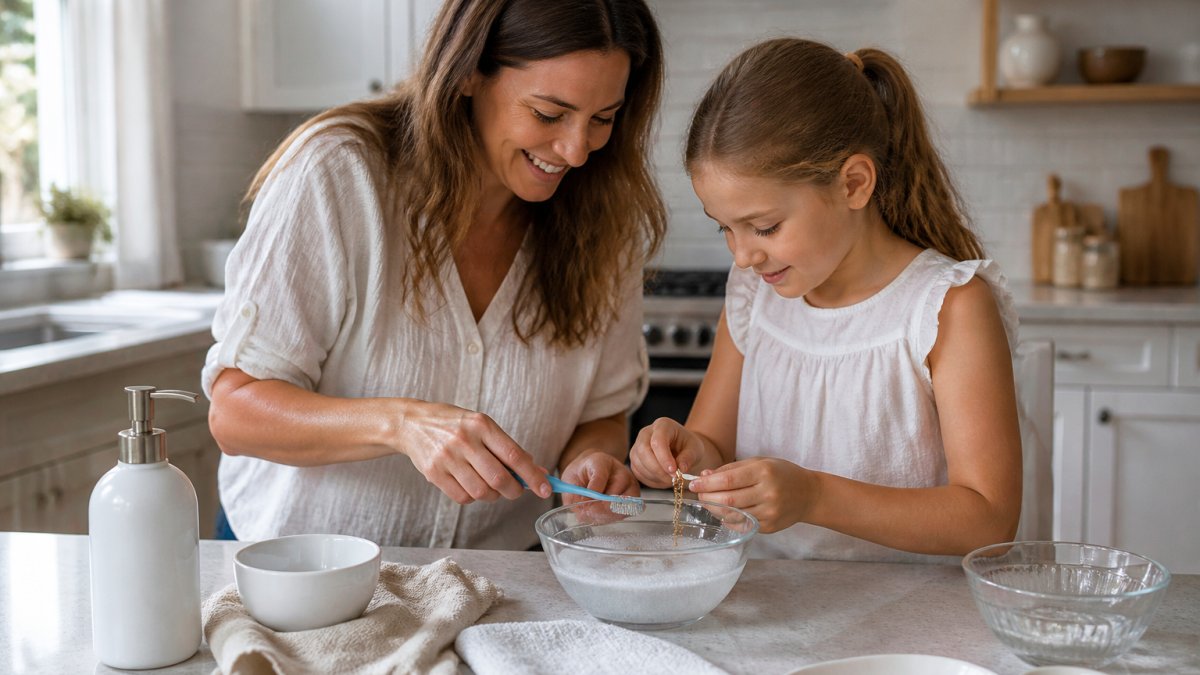
Step-by-Step: Soak, Scrub, Rinse, Dry
- Fill a bowl with lukewarm water. Hot water can loosen glue in settings.
- Add one drop of gentle dish soap. Swirl it in.
- Soak the necklace for 15 to 20 minutes. This lifts dirt and body oils from the chain links.
- Scrub gently with a soft toothbrush. Work around the clasp and between links where grime hides.
- Rinse under lukewarm running water. Plug the drain first, or rinse over a bowl.
- Dry thoroughly with a soft cloth. Then buff with a jewelry polishing cloth.
Can You Clean Gold Jewelry With Dish Soap? What's Safe
Yes, you can clean gold jewelry with dish soap if it is gentle and unscented. One drop in lukewarm water breaks down the oils that make gold look cloudy.
What to avoid is just as important:
- Harsh chemicals: chlorine, ammonia, and bleach can damage gold alloys and certain stones.
- Alcohol-based cleaners: these dry out and can dull a finish over time.
- Vinegar and abrasive materials: baking soda pastes and rough scrubs scratch soft gold.
If a label says "not for use on gold," believe it. When in doubt, mild soap wins.
Solid Gold, Gold-Plated, or Gold-Filled: Match the Method
Not every gold necklace can take the same care. Plated pieces have a thin gold layer that wears away, so scrubbing harder does the opposite of helping.
Here is how the three types compare:
| Type | What It Is | Cleaning Approach | Watch Out For |
|---|---|---|---|
| Solid gold | Gold all the way through | Soap, water, soft brush | Very little; it is durable |
| Gold-filled | Thick gold layer bonded to base metal | Gentle soap and soft cloth | Avoid abrasives that wear the layer |
| Gold-plated | Thin gold coating over base metal | Light wipe, minimal soaking | Rubbing can remove the plating |
A quick check: look for a stamp like "14K" or "18K" inside the clasp. Solid gold usually carries a karat mark; plated pieces often say "gold plated" or carry no mark. If unsure, treat it as plated and clean gently.
How to Clean Gold Jewelry With Gemstones, Pearls, or Enamel
Plain gold can take a soak and a soft brush. The moment a stone, pearl, or enamel panel enters the picture, the method changes, water and heat attack the bond holding a stone or enamel in place, and soft materials scratch easily. Before you touch the necklace, identify what is set in it.
First, Identify What Is Actually in the Setting
A few household checks narrow it down:
- Look at the back of the setting. An open-back setting with visible prongs usually holds a hard stone. A closed-back or glued-in stone is a warning sign, assume it cannot be soaked.
- Check the hardness. Diamond, sapphire, and ruby sit at the top of the Mohs scale and tolerate a soft brush. Opal, turquoise, pearl, amber, and coral are soft and porous and do not.
- Watch for foil or backing. Some costume and vintage pieces use foil behind the stone. Water gets under the foil and turns it cloudy, that damage is permanent.
If you cannot tell what the stone is, treat it as the most delicate option on this list. That default never causes damage.
Material-by-Material Cleaning Rules
| Material | Safe Method | Never Do This | Why |
|---|---|---|---|
| Diamond, sapphire, ruby | Lukewarm soapy water, soft brush | Skip ultrasonic if the stone is glued | Hard, but the setting is the weak point |
| Pearl | Damp soft cloth, dry immediately | Soak, brush, or ultrasonic | Porous nacre; acids and abrasives strip the surface |
| Opal, turquoise, coral, amber | Damp cloth only, dry fast | Soak or brush | Porous; water and heat cause cracking or discoloration |
| Emerald | Brief lukewarm rinse, soft cloth | Ultrasonic or steam | Internal fractures are common; vibration can spread them |
| Enamel | Damp cloth, no soak | Soak or scrub | Water wicks under edges and lifts the enamel |
| Glued settings (any stone) | Dry soft cloth, spot-clean metal only | Soak, heat, or ultrasonic | Heat and water dissolve or soften adhesive |
How to Clean the Gold Without Touching the Stone
When a piece mixes gold with a delicate stone, clean the metal and leave the stone alone:
- Wrap a soft cloth around the stone and hold it against the setting with one hand.
- Dip a soft-bristled toothbrush in lukewarm soapy water and brush only the gold, the chain, the bail, the clasp, the visible metal around the setting.
- Rinse by pressing a damp cloth against the gold, not by running the whole necklace under a tap.
- Dry the gold with a lint-free cloth, then let the piece air-dry for an hour before storing it.
For pearls, the rule is simpler: wipe them with a soft damp cloth after each wear, before body oils and perfume residue set. Never store pearls in a sealed plastic bag, they need airflow, and trapped moisture dulls the nacre.
A pearl and gemstone care guide from the American Gem Society recommends the same cautious, material-specific approach.
How Often to Clean Gold Jewelry (and When to See a Pro)
How often to clean gold jewelry depends on how often she wears it. A daily-worn necklace collects oils fast, so a gentle clean every two to four weeks keeps it bright; a keepsake worn on special occasions may only need cleaning a few times a year.
Signs it is time for a professional:
- The clasp feels loose or does not click shut
- A stone is wobbly in its setting
- The chain has a kink that will not straighten
A jeweler can tighten a clasp or reset a stone in minutes. Do not try those repairs at home.
Age-Appropriate Cleaning for a Daughter's Necklace
Who cleans the necklace matters as much as how. A slippery gold chain, a bowl of water, and a drop of dish soap are safe for an adult and a genuine hazard for a young child. Below, each age is paired with what she can safely do, and what stays with you.
Match the Task to the Age
| Age | What She Can Do | What You Keep | Why |
|---|---|---|---|
| Under 3 | Nothing, do not let her handle the necklace unsupervised | Everything, including storage | Choking risk from small clasps, charms, and jump rings |
| Ages 3-7 | Watch you clean it; hand you the polishing cloth | Soap, water, brush, and the necklace itself | She can swallow or lose small parts; soap and water are slip hazards |
| Ages 8-12 | Help with drying and polishing under your eye | The soak, the brush, and the rinse | Fine motor control is developing; a dropped chain is gone |
| Ages 13+ | Clean it herself over a plugged sink using your method | Clasp and stone inspections | She can follow the steps; wear checks still need an adult eye |
The Three Real Hazards
Most cleaning accidents with a child's necklace come down to three preventable things:
- Small parts. Clasps, jump rings, and charms are choking hazards for children under three. Keep the necklace out of reach between wears, and never let a young child mouth or hold a loose chain.
- Cleaning solutions. Dish soap, vinegar, and any jewelry cleaner are not safe to ingest and can irritate eyes and skin. Mix the solution yourself, keep the bowl out of reach, and rinse the necklace thoroughly before it goes back on.
- Slippery surfaces. A wet gold chain slides off a cloth in a second. Clean over a plugged sink lined with a towel, or over a bowl, and never over an open drain.
How to Tell What Her Necklace Is Made Of
Cleaning tolerance depends on the material, so identify it before you clean:
- Look for a stamp. Solid gold usually carries a karat mark like "14K" or "18K" inside the clasp or on a small tag. Gold-filled pieces often say "gold filled" or "14K GF." Gold-plated pieces may say "gold plated" or carry no mark at all.
- Check the wear pattern. If the gold color has rubbed off at high-contact points, the clasp, the chain edges, it is plated. Solid gold and gold-filled pieces keep their color through wear.
- Weigh it in your hand. Solid gold feels noticeably heavier than a plated piece of the same size.
Set Up the Cleaning Session Safely
A few habits make the process safer for both of you:
- Clear the counter and put away anything a younger child could grab.
- Mix the soap and water yourself before she joins you.
- Work over a plugged sink or a bowl, never over an open drain.
- Keep the necklace in your hand or on the towel, never loose on the counter.
- Rinse the necklace thoroughly and dry it before it goes back around her neck.
- Store it in a soft pouch, out of reach, when the cleaning is done.
The goal is simple: teach her that a keepsake lasts when it is cared for, and keep the parts that could hurt her out of her hands until she is ready.
Conclusion: Keep the Meaning, Not the Grime
A daughter's necklace carries a message she will read again and again. Keeping it clean keeps that message bright.
At Thread & Flame Co, we make meaningful necklace gifts and custom message card jewelry designed to celebrate the people you love most.
Ready to give her something she will treasure? Choose options from Thread & Flame Co and start a keepsake that lasts.
Frequently Asked Questions
What's the best way to clean a gold necklace at home?
Mix a few drops of gentle dish soap into a bowl of warm water. Soak the necklace for 15 to 20 minutes, then scrub gently around the chain links and clasp with a soft-bristled toothbrush. Rinse under lukewarm water and dry thoroughly with a soft cloth. For solid gold, this method is safe and effective. Skip vinegar, alcohol, or abrasive cleaners, which can strip finishes or scratch the surface.
Does Dawn dish soap clean gold jewelry safely?
Dawn and similar gentle dish soaps cut through skin oils and grime without harsh chemicals, making them a common choice for cleaning gold jewelry with dish soap. Use only a few drops in warm water. Avoid lemon-scented or antibacterial versions with added acids or bleach. After soaking, rinse well so no soapy residue stays in the chain links or around the clasp.
How often should you clean a gold necklace?
For a necklace worn daily, clean it every two to four weeks with the warm water and dish soap method. Pieces worn occasionally can go two to three months between cleanings. If you see dullness, buildup around the clasp, or residue in the chain links, it's time. Necklaces with gemstones, pearls, or enamel may need gentler, less frequent cleaning, so check the stone type first.
Can you clean a gold necklace with gemstones the same way as plain gold?
Not always. Solid gold chains handle warm water and gentle soap well, but gemstones, pearls, and glued settings need extra care. Pearls and opals are porous and should only be wiped with a soft damp cloth. Avoid soaking pieces with glued settings, since water can loosen the adhesive. When in doubt, spot-clean the gold portion and leave the stones alone, or take the necklace to a jeweler.