

Table of Contents
- Why Personalized Gold Necklaces Need Special Care
- What You'll Need to Clean Your Gold Necklace
- Step-by-Step: How to Clean Gold-Plated Jewelry at Home
- How Often to Clean Gold Jewelry to Prevent Buildup
- How to Store Gold Necklaces to Prevent Tangling
- Risks to Avoid: Abrasives, Chemicals, and Ultrasonic Cleaners
- Troubleshooting Tarnish and Plating Wear
- The Bottom Line on Necklace Maintenance
- Frequently Asked Questions
Last Updated: September 7, 2026
Why Personalized Gold Necklaces Need Special Care
A personalized gold necklace carries more than shine; it carries a name, a date, or a message that makes it irreplaceable. Unlike a plain chain, these pieces feature engraved crevices and delicate details that demand a gentler touch. Proper care keeps sentiment-filled keepsakes looking as meaningful as the day they were gifted.
The challenge is that most standard jewelry cleaning advice doesn't account for the vulnerability of engraved surfaces. Dirt and oil buildup settles into the letters and grooves of a nameplate, dulling the design. Aggressive scrubbing or harsh chemicals can strip the finish, especially on gold-plated pieces, leaving you with a tarnished reminder of what was once a thoughtful gift.
This guide walks you through the safest methods to clean gold necklace pieces at home, how often to clean gold jewelry to prevent buildup, and the storage habits that keep chains tangle-free. We'll also cover the critical differences between caring for solid gold versus gold-plated jewelry, because the wrong approach can cause permanent damage.
What You'll Need to Clean Your Gold Necklace
Before you begin, gather supplies that are gentle enough for delicate jewelry. Most of these items are already in your home, which makes routine maintenance both simple and affordable.
- Mild dish soap: A few drops mixed with warm water creates a safe cleaning solution that breaks down oils without damaging the metal.
- Warm water: Lukewarm, not hot, is ideal. Hot water can weaken settings or affect the finish on plated pieces (the American Academy of Dermatology).
- Soft, lint-free cloth: Microfiber works well for drying and gentle buffing. Avoid paper towels, which can scratch.
- Soft-bristled brush: A baby toothbrush or a clean makeup brush is perfect for reaching engraved details.
- Polishing cloth: Use one designed specifically for jewelry to restore shine without abrasives.
Step-by-Step: How to Clean Gold-Plated Jewelry at Home
Gold-plated jewelry requires the most cautious approach because the thin layer of gold over the base metal can wear away with friction. The goal is to remove dirt and oil buildup gently, without rubbing the plating off.
Follow these steps to clean gold necklace pieces safely:
- Prepare the solution: Fill a small bowl with warm water and add two or three drops of mild dish soap. Swirl gently to mix.
- Soak briefly: Submerge the necklace for no more than one to two minutes. This loosens oils and debris without prolonged chemical exposure.
- Clean gently: Dip the soft-bristled brush into the soapy water and lightly brush the surface using small, circular motions. Focus on the chain links and the front of the pendant.
- Rinse carefully: Rinse the necklace under lukewarm running water to remove all soap residue. Hold it over a bowl or sink with the drain closed.
- Pat dry: Lay the necklace on a soft, lint-free cloth and pat dry. Do not rub, as friction can dull the finish.
- Air dry completely: Allow the piece to air dry for a few minutes before wearing or storing to ensure no moisture remains in the crevices.
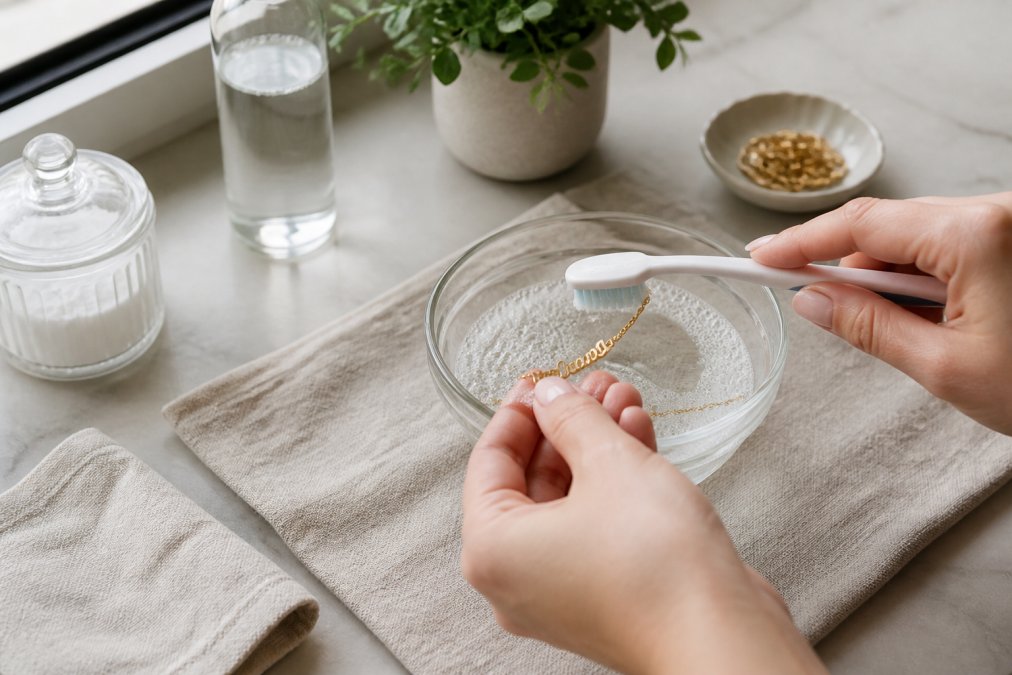
Cleaning Engraved Crevices on Nameplates and Charms
The letters and designs on personalized jewelry are where buildup hides most stubbornly. A common mistake is using a toothpick or pin to dig out debris, which can scratch the engraving and the surrounding metal.
For engraved jewelry, the soft-bristled brush is your best tool. Dip it in the soapy water and gently work the bristles back and forth across the lettering. The key is patience over pressure. If your nameplate necklace has intricate details, you can repeat the soak-and-brush cycle rather than scrubbing harder.
Rinse thoroughly after cleaning, as soap residue left in crevices can dull the finish over time. This attention to detail keeps the personalization crisp and legible for years.
How Often to Clean Gold Jewelry to Prevent Buildup
A simple maintenance routine prevents the need for deep cleaning. Most jewelry experts recommend cleaning gold necklaces every one to three months, depending on how often they are worn (gemsociety.org).
Daily wear exposes jewelry to skincare products, perfume, sweat, and environmental pollutants. These accumulate into a film that masks the gold's natural luster. If you wear your personalized necklace every day, a monthly light cleaning keeps it looking new. For occasional wear, a quarterly cleaning schedule is sufficient.
How to Store Gold Necklaces to Prevent Tangling
Proper storage is half the battle in necklace maintenance. A tangled chain not only frustrates you at the start of the day, but the knots and pulls can stress the metal and weaken links over time.
The best method to store gold necklaces is to lay each piece flat in a separate compartment or pouch. If you have multiple chains, consider a jewelry box with individual slots. For those who prefer hanging, use a necklace stand with sufficient spacing between hooks to prevent chains from intertwining.
Risks to Avoid: Abrasives, Chemicals, and Ultrasonic Cleaners
Knowing what not to do is as important as the cleaning method itself. The most common cause of damaged personalized jewelry is well-intentioned but overly aggressive cleaning. However, the threat isn't just from what you use to clean; it's also from what you wear on your skin.
Abrasive materials are the primary culprit. Scouring pads, harsh brushes, and even some paper towels create micro-scratches that dull the gold's reflective surface. On gold-plated jewelry, these scratches accelerate wear, eventually exposing the base metal. For engraved pieces, this is especially damaging, as scratches within the lettering can blur the crisp edges of the personalization.
Harsh chemicals pose a more insidious threat. The most damaging is chlorine, commonly found in swimming pools, hot tubs, and household cleaning products. Chlorine doesn't just discolor gold; it can chemically break down the metallic bonds, causing the gold to become brittle and, in plated pieces, rapidly strip the thin layer from the base metal (the CDC). Always remove your necklace before swimming, showering, or using any cleaning agents.
The chemistry of your daily products: A critical, often-overlooked risk is the reaction between your personal care products and the metal. Perfumes, lotions, and sunscreens often contain alcohol, acids, or sulfur compounds. When applied directly over a necklace, these substances can leave a stubborn, hazy film on the gold that is harder to remove than simple sweat. Over time, the acids can also accelerate tarnish on gold-plated surfaces. The best practice is the 'last on, first off' rule: apply your fragrance and let it dry completely before putting on your necklace, and remove the necklace before applying heavy lotions or sunscreens.
Ultrasonic cleaners are effective for solid gold but are a significant risk for plated jewelry and pieces with delicate engravings. The high-frequency vibrations can loosen settings or strip thin plating, especially in the fine details of a nameplate. For personalized pieces, stick to the gentle hand-cleaning method described above.
A final note on safety: always check the clasp. The clasp is the most mechanically stressed part of the necklace. Friction from daily wear can weaken the spring or the soldered joints. During your cleaning routine, inspect the clasp to ensure it opens and closes securely and that there are no bent or broken links nearby. Catching a weak clasp during a cleaning session is far better than discovering it after the necklace has slipped off unnoticed.
Troubleshooting Tarnish and Plating Wear
Even with meticulous care, gold-plated jewelry will eventually show signs of wear. It's crucial to understand the difference between 'cleaning' (removing surface dirt and oils) and 'restoring' (reversing chemical tarnish or physical wear). Cleaning is a routine you can do at home; restoring often requires professional intervention.
Diagnosing the problem: First, identify what you're seeing.
- Dull film: If the gold looks hazy but the color is uniform, it's likely a buildup of lotions, soaps, and skin oils. This is a cleaning issue.
- Dark patches or a gray/brown tint: This is true tarnish, a chemical reaction between the metal and sulfur or oxygen in the air. It's more common on gold-plated pieces where the base metal (often brass or copper) reacts with your skin's chemistry.
- A different color showing through: If you see a silver, copper, or pinkish tone peeking through at the edges of the pendant or on the high points of the chain, this is plating wear. The gold layer has physically worn away.
For light tarnish on gold-plated pieces: A jewelry polishing cloth designed for plated metals can restore some shine. These cloths contain a mild abrasive (like jeweler's rouge) that removes the surface oxidation without the harshness of liquid cleaners. Use it sparingly and gently, as even these cloths remove a microscopic layer of metal.
For heavy tarnish or wear: Once the plating has worn through to the base metal, the damage is not reversible at home. No amount of polishing will bring the gold back. At this stage, your options are to have the piece professionally re-plated or to retire it from daily wear. Professional re-plating involves electroplating a new layer of gold onto the piece, a process that requires specialized equipment and chemicals. It is a viable option for sentimental pieces, but it's not a DIY project.
Solid gold is different: Solid gold necklaces, by contrast, can be polished repeatedly and last a lifetime with proper care. Tarnish on solid gold is rare, but it can happen with prolonged exposure to harsh chemicals. A professional jeweler can buff out scratches and restore the original luster without the risk of removing a plating layer.
A note on 'dip' cleaners: You may see commercial jewelry 'dips' that promise instant shine. Avoid these for personalized and plated pieces. They contain strong acids that can strip plating and etch the fine details of an engraving, leaving the lettering looking dull and washed out. The gentle soap-and-water method is always the safest choice for protecting the integrity of your personalization.
The Bottom Line on Necklace Maintenance
Caring for a personalized gold necklace is about preserving the story it tells. A clean gold necklace reflects not just light, but the care and intention behind the gift. Whether your piece is solid 14k gold or gold-plated, the principles remain the same: gentle cleaning, careful storage, and consistent daily rituals.
The sentimental value of these pieces makes them worth the extra attention. A nameplate necklace engraved with a child's name or a special date deserves to be kept in pristine condition, ready to be worn and admired for years to come.
For those searching for a meaningful piece to start a new tradition, Thread & Flame Co designs personalized necklaces meant to be treasured. Our custom message card jewelry pairs elegant design with heartfelt sentiment, creating keepsakes that withstand both time and the occasional cleaning mishap. Choose options that speak to your loved one's style, and care for them with the same thoughtfulness that went into choosing them.
Frequently Asked Questions
How do I clean a personalized gold necklace without damaging the engraving?
Use a gentle touch. Mix a few drops of mild dish soap into a bowl of warm water. Dip a soft-bristled brush, like a baby toothbrush, into the solution and gently work it into the engraved letters using small circular motions. Avoid scrubbing hard. Rinse the necklace under warm running water, then pat it dry with a lint-free cloth and let it air dry completely before storing.
Can I use Dawn dish soap to clean my 14k gold necklace?
Yes, a mild dish soap like Dawn is safe for 14k solid gold. It cuts through the body oils, lotion, and dirt that make gold look dull. Dilute a few drops in warm water rather than applying it directly. Avoid soaps with added moisturizers, dyes, or harsh degreasers. For gold-plated pieces, the same method works, but use an even softer touch to protect the thin layer of gold.
How can I tell if my necklace is solid gold or gold-plated before cleaning?
Check for a stamp. Solid gold is usually marked with a karat value like 14k, 18k, or 24k. Gold-plated pieces often have no stamp or may say 'GP' or 'HGE.' If you are unsure, treat the necklace as gold-plated and use the gentlest cleaning methods only. Skip polishing cloths with rouge, which can wear through the plating over time.
How often should I clean my gold necklace to prevent tarnish?
For necklaces worn daily, a quick clean every two to four weeks prevents the buildup of oils and lotions that dull the finish. If you only wear the piece for special occasions, clean it after every few wears and always before storing it long-term. Gold itself resists tarnish, but the alloys and base metals in plated pieces need more frequent attention to stay bright.
Proper maintenance ensures your cherished necklace remains a daily reminder of the bond it represents. With the right supplies and a gentle routine, you can keep every letter crisp and every link shining. Start a care habit today, and your personalized gold necklace will stay as beautiful as the moment you first wore it.