

Table of Contents
- What Makes Personalized Jewelry Ethically Sourced
- How to Verify Ethical Jewelry Brands Before You Buy
-
Where to Buy Ethically Sourced Personalized Jewelry: 6 Trusted Options
- Quick Comparison: Price, Materials, and Customization
- 1. Thread & Flame Co: Custom Message Card Jewelry for Sentimental Gifts
- 2. Brilliant Earth: Fully Traceable Fine Jewelry
- 3. Reflective Jewelry: Fair Trade Custom Commissions
- 4. Mejuri: Recycled Gold Everyday Pieces
- 5. Catori Life: Nature-Inspired Handcrafted Jewelry
- 6. Quince: Transparent Pricing on Classic Staples
- Material-Specific Ethical Sourcing: What to Look For in Each Metal and Stone
- Eco-Friendly Jewelry Gift Ideas for Daughters, Wives, Moms, and Grandmothers
- Custom Message Card Jewelry: Making the Personalization Meaningful
- End-of-Life Jewelry Recycling: What Happens After the Gift
- Conclusion
- Frequently Asked Questions
Last Updated: September 18, 2026
What Makes Personalized Jewelry Ethically Sourced
Ethically sourced personalized jewelry uses traceable materials, fair labor, and environmental responsibility from mine to engraving bench.
The term covers four commitments:
- Traceable materials you can follow back to origin
- Conflict-free stones not tied to violence or forced labor
- Fair labor with living wages and safe conditions
- Lower environmental impact via recycled metals, responsible mining, and reduced waste
How to Verify Ethical Jewelry Brands Before You Buy
Verification starts with documentation, not marketing copy. A brand that knows its supply chain can say where its gold comes from and who cut its stones. Ask for:
- Third-party verification from an independent auditor, not a self-issued badge
- Gemstone certification naming the stone, origin, and treatment
- Supply chain audit results or a published traceability report
- Hallmarking on precious metals to confirm purity
- Named suppliers, not vague phrases like "responsibly sourced"
The Greenwashing Checklist: Five Claims That Mean Nothing
These five phrases appear constantly on jewelry sites and carry almost no weight on their own:
- "Eco-friendly" with no definition of what is being measured
- "Ethically made" without naming the factory, country, or standard
- "Sustainable" applied to a mined, non-renewable material
- "Conflict-free" as a self-declaration rather than a certified process
- "Responsibly sourced" with no supplier named anywhere
How to Audit a Custom Jeweler's Supply Chain for Personalized Components
This step matters most for personalized pieces. A stock necklace and an engraved necklace are not the same supply chain: the engraving, pendant plating, jump ring, chain, and clasp are often sourced separately from the main stone or metal, each with its own labor and origin story.
- Ask for the chain and clasp separately. A jeweler may know the pendant gold's origin but not who made the clasp. Ask about the chain, clasp, and jump rings, not just the focal piece.
- Ask where the engraving happens. It may be in-house or outsourced. Ask whether the engraver is an employee, a contracted studio, or an overseas vendor, and whether that vendor has been audited.
- Ask about the plating bath for vermeil and gold-filled pieces. Vermeil requires a sterling silver base with a gold layer of at least 2.5 microns. Ask the base metal, gold thickness, and whether the plating shop is disclosed.
- Ask for the stone's paper trail if a birthstone or gemstone is involved. Request the grading report or origin disclosure in writing before the piece is set; once mounted, swapping a stone is expensive and awkward.
- Ask what happens to scrap and returns. A jeweler with a real circular practice can tell you where metal filings and returned pieces go. If the answer is "the trash," that is a supply chain answer too.
Red Flags Specific to Personalized Orders
Personalized jewelry is final-sale by nature, removing your easiest remedy if something is misrepresented. Watch for:
- No written material disclosure before you pay a deposit on a custom piece
- Refusal to name the engraving vendor while naming every other supplier
- "Final sale" paired with vague sourcing language, leaving you no recourse and no proof
- A certification badge linking to the brand's own page rather than an independent auditor
Where to Buy Ethically Sourced Personalized Jewelry: 6 Trusted Options
The best place to buy ethically sourced personalized jewelry is a brand that documents its materials and still delivers meaningful customization. These six options meet that bar.
Quick Comparison: Price, Materials, and Customization
| Brand | Starting Price | Materials | Customization |
|---|---|---|---|
| Thread & Flame Co | See pricing page | Meaningful necklace gifts, custom message cards | Engraving, personalized messages |
| Brilliant Earth | $95 | Recycled gold, traceable gemstones | Extensive ring and necklace options |
| Reflective Jewelry | Custom quote | Fair trade, conflict-free materials | One-on-one custom commissions |
| Mejuri | $50 | Recycled gold, responsibly sourced diamonds | Engraving on select items |
| Catori Life | $60 | Sustainable, ethically produced materials | Nature-inspired symbolic pieces |
| Quince | $40 | 14k gold, ethically sourced stones | Limited personalization |
1. Thread & Flame Co: Custom Message Card Jewelry for Sentimental Gifts
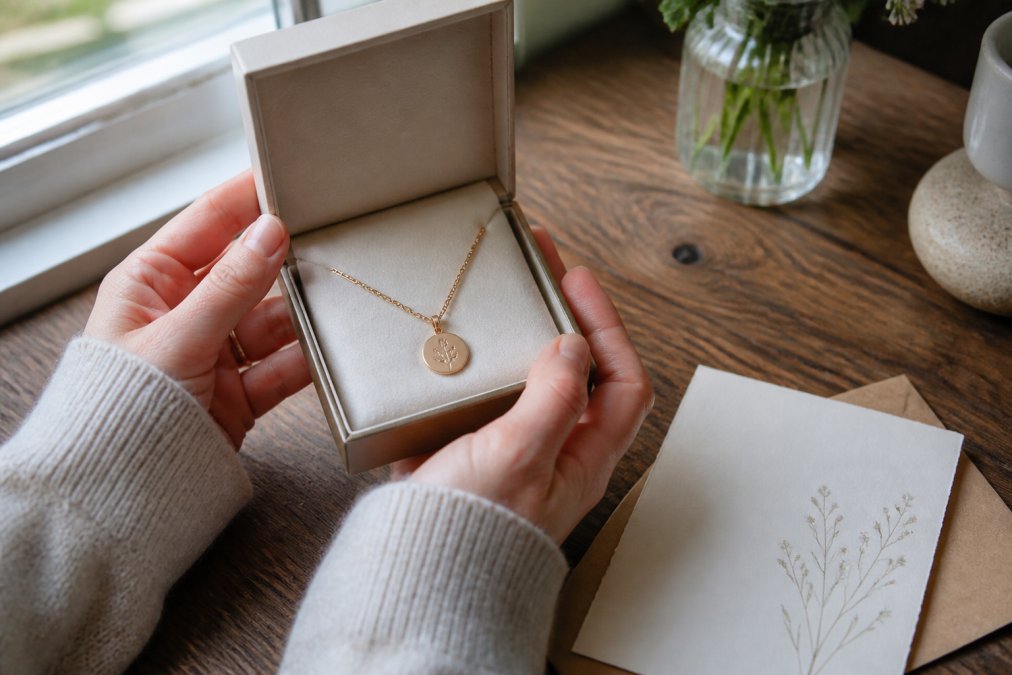
Thread & Flame Co specializes in personalized pieces as sentimental gifts. The brand specializes in meaningful necklace gifts paired with custom message card jewelry, designed to celebrate daughters, wives, moms, and grandmothers.
Pros:
- Custom message cards let you write your own sentiment
- Collections organized around specific relationships
- Jewelry designed as a keepsake
Cons:
- Pricing varies by piece, so check the site for current options
- Turnaround matters if you are buying close to a birthday
2. Brilliant Earth: Fully Traceable Fine Jewelry
Brilliant Earth built its reputation on traceability, using recycled gold and platinum and providing detailed origin tracking for diamonds and gemstones, more than most fine jewelry retailers offer.
3. Reflective Jewelry: Fair Trade Custom Commissions
Reflective Jewelry works on a commission model, pairing buyers with artisan jewelers for one-on-one consultations, with a long-standing focus on fair trade practices and conflict-free sourcing.
4. Mejuri: Recycled Gold Everyday Pieces
Mejuri sells modern, minimalist jewelry at accessible prices, starting around $50, using recycled gold and responsibly sourced diamonds, with engraving on select items.
5. Catori Life: Nature-Inspired Handcrafted Jewelry
Catori Life is a woman-owned brand making handcrafted, nature-inspired pieces with sustainable materials and small-batch production, starting around $60.
6. Quince: Transparent Pricing on Classic Staples
Quince works directly with factories and publishes cost breakdowns, unusual in jewelry retail. Pieces start around $40, using 14k gold and ethically sourced stones.
Material-Specific Ethical Sourcing: What to Look For in Each Metal and Stone
Different materials carry different ethical risks, so verification questions change depending on what you are buying. The table below compares common personalized-jewelry materials on mining impact, labor risk, durability, and documentation.
| Material | Mining Impact | Labor Risk | Durability | Documentation to Request |
|---|---|---|---|---|
| Recycled gold | Avoids new extraction | Low if refiners are audited | High (solid) | Refiner name, recycled-content statement |
| Newly mined gold | High | High in artisanal and small-scale mining | High (solid) | Origin, refiner, LBMA or RJC chain-of-custody |
| Sterling silver | Moderate | Moderate | Moderate (tarnishes) | Hallmark, recycled-content statement |
| Gold vermeil | Low (thin gold layer) | Low to moderate | Moderate (plating wears) | Base metal, gold thickness in microns |
| Gold-filled | Low | Low to moderate | Higher than vermeil | Gold layer by weight percentage |
| Lab-grown diamonds | None from mining | Low | Same as mined | Grower name, grading lab report |
| Mined diamonds | High | High in conflict regions | Same as lab-grown | Kimberley Process plus origin disclosure |
| Colored gemstones | Varies widely | High in unregulated regions | Varies | Origin, treatment disclosure, cutter |
Recycled Gold
Recycled gold should come with a statement about the scrap metal's source. It avoids new mining, reducing carbon footprint and sidestepping many extraction labor concerns. Ask whether the refiner is named and the recycled content verified rather than self-declared; many jewelers use a single audited refiner and disclose it on request.
Sterling Silver
Sterling silver is 92.5% silver and 7.5% other metals, usually copper. It is frequently recycled, but ask about the refining process and look for hallmarking confirming purity. Sterling tarnishes with wear, which matters for a daily-worn personalized piece; rhodium plating slows tarnishing but adds another supplier.
Gold Vermeil
Gold vermeil is a sterling silver base with a gold layer of at least 2.5 microns, thicker than standard plating. It is common for personalized pieces because it keeps costs down while holding up to daily wear. Ask for the base metal, gold thickness in microns, and plating shop; below 2.5 microns it is technically plated jewelry, not vermeil, and wears through faster.
Gold-Filled
Gold-filled jewelry bonds a gold layer to a base metal, usually brass, by weight rather than electroplating. In the US, pieces are typically marked with a fraction such as 1/20 14K, meaning the gold layer is one-twentieth of total weight and 14-karat.
Lab-Grown Diamonds
Lab-grown diamonds are chemically identical to mined stones and avoid mining entirely. Ask for certification naming the grower and grading lab. They are increasingly common in personalized birthstone and accent settings because the price gap versus mined stones has narrowed.
Mined Diamonds and Colored Gemstones
Certification matters most for colored stones, where treatments and origin are hard to verify without documentation. For mined diamonds, the Kimberley Process certifies a stone is not conflict-financed but says nothing about mine or cutting labor conditions. Ask for origin disclosure beyond Kimberley, and for colored stones ask whether they are heat-treated, fracture-filled, or dyed, since those treatments affect value and supply-chain ethics.
Matching the Material to the Personalization
Not every material suits every personalized piece. Engraving cuts into the surface, so softer metals like fine silver and high-karat gold show wear faster at the engraving, and vermeil and gold-filled pieces can lose their gold layer at the engraving edge.
Eco-Friendly Jewelry Gift Ideas for Daughters, Wives, Moms, and Grandmothers
The right eco-friendly jewelry gift depends less on the occasion than on the relationship you are honoring.
Custom Message Card Jewelry: Making the Personalization Meaningful
Custom message card jewelry pairs a physical piece with a written message, which is why it resonates for sentimental gifting. The necklace is the object; the card is the reason. The message is the harder half to get right. A few things that help:
- Write in your own voice rather than reaching for a quote
- Reference a specific memory instead of a general sentiment
- Keep it short enough to read aloud without losing the room
- Match the tone to the relationship, not the occasion
End-of-Life Jewelry Recycling: What Happens After the Gift
Most jewelry eventually stops being worn, and what happens next is where the circular economy works or does not. A piece that sits in a drawer for thirty years is not sustainable, no matter how it was made. Recycling options include:
- Refining to recover the precious metal content
- Restyling an old piece into a new design, preserving sentimental value
- Reselling through a consignment jeweler or buyback program
- Donating to a charity that accepts fine jewelry
Conclusion
Choosing where to buy ethically sourced personalized jewelry comes down to one question: can the brand show the paperwork behind the sentiment? A message card is only meaningful if the piece was made with the same care you put into the words.
Frequently Asked Questions
What certifications should I look for when buying ethically sourced personalized jewelry?
For diamonds, look for Kimberley Process certification, which confirms the stones are conflict-free. For colored gemstones, check for American Gem Society (AGS) or Gemological Institute of America (GIA) reports. For recycled metals, ask whether the brand uses certified recycled gold or sterling silver from a recognized refiner. For labor practices, Fair Trade Certified or Fairmined marks indicate third-party verification of fair wages and safe working conditions. If a brand cannot name a specific certification, treat the ethical claim as unverified.
How can I verify if a jewelry brand is truly sustainable before I buy?
Start with the brand's supply chain transparency page. A trustworthy brand names its refineries, stone suppliers, and manufacturing facilities. Look for third-party verification such as Fairmined, Fair Trade Certified, or SCS Global Services recycled content certification. Check whether the brand publishes a supply chain audit or annual impact report. For personalized items, ask specifically where the engraving and assembly happen, since those steps are often outsourced. If the brand only uses vague terms like 'eco-conscious' without documentation, that is a red flag.
Are personalized jewelry pieces usually made from recycled materials?
It varies by brand. Some jewelers, such as Mejuri and Brilliant Earth, use recycled gold and platinum as a default across their lines, including engraved and custom pieces. Others use recycled metals only for select collections. When shopping, ask directly whether the specific personalized item you want is made from recycled precious metals. Brands that use recycled gold typically state it on the product page. If the information is not listed, contact customer service and ask for written confirmation before ordering.
How does personalized jewelry impact the environment compared to mass-produced items?
Personalized jewelry is often made to order, which reduces overproduction and deadstock waste compared to mass-produced pieces. However, the environmental impact depends more on materials than on personalization itself. Recycled gold and sterling silver cut mining demand and reduce carbon footprint. Lab-grown diamonds use significantly less land and water than mined stones. Small-batch artisan production also tends to generate less waste. The key is choosing a brand that combines personalization with sustainable sourcing and transparent manufacturing.