

Table of Contents
- Why Jewelry Matters in Preserving Family History
- How to Document Family Jewelry History
- Best Storage for Heirloom Jewelry
- Cleaning and Maintaining Family Jewelry
- Repurposing Vintage Family Jewelry
- Insurance and Appraisal for Heirlooms
- Passing Down Stories: Intergenerational Storytelling
- Frequently Asked Questions
Last Updated: October 3, 2026
Why Jewelry Matters in Preserving Family History
Jewelry is more than decoration. It's a tangible connection to the people who wore it before you. A grandmother's ring, a mother's necklace, a great-aunt's brooch, these pieces carry stories, values, and love across generations.
Heirloom pieces are physical objects descendants can hold, wear, and feel connected to, anchoring family narratives in ways photos and documents cannot.
Thread & Flame Co creates meaningful necklace gifts and custom message card jewelry designed to celebrate the people you love most. Whether your family jewelry is brand new or passed down through generations, proper care ensures it survives for decades to come.
Most people don't know where to start with inherited pieces. Without proper care, precious metals tarnish, gemstones cloud, and delicate materials crack.
This guide walks you through exactly how to preserve family history jewelry. You'll learn how to document pieces, store them safely, maintain them properly, and pass them down with their stories intact.
How to Document Family Jewelry History
Documentation transforms a piece from an object into a story. A heirloom loses value if nobody knows its origin and history.
Creating a Written Record
Write down the metal type, gemstones, approximate age, original owner, and stories attached to each piece. Use a notebook or digital document, what matters is capturing information before it's lost to time.
Here's what to include for each piece:
- Name of the piece (e.g., "Grandmother's diamond ring," "Mother's gold locket")
- Metal and gemstones (e.g., "14k yellow gold with sapphire center")
- Estimated age or date acquired
- Original owner's name and relationship to you
- How the piece was acquired (inherited, gifted, purchased)
- Stories or memories connected to the piece
- Condition notes (any damage, repairs, or wear)
- Current location (where you store it)
Photographing and Digitizing Your Collection
Photograph each piece in natural light from multiple angles (front, back, side, close-ups of engravings). Store photos digitally in a clearly named folder. Create a simple spreadsheet with piece name, metal, gemstones, owner, and photo file location to organize your family's jewelry catalog.
The National Archives guidance on digitizing family records recommends high-resolution photos (at least 300 DPI) for archival purposes. For jewelry, this level of detail captures fine engravings and maker's marks that future generations will want to see.
Best Storage for Heirloom Jewelry
How you store jewelry determines how well it survives. The wrong conditions cause tarnish, fading, corrosion, and material damage. The right storage environment keeps pieces stable for decades.
Controlling Temperature and Humidity
Store jewelry in a cool, dry place at room temperature (65-70°F). Avoid basements, attics, and bathrooms. Maintain relative humidity between 30% and 50% using a humidity monitor (under $15). Use a dehumidifier or humidifier as needed to protect your collection.
Protecting From Light and Environmental Damage
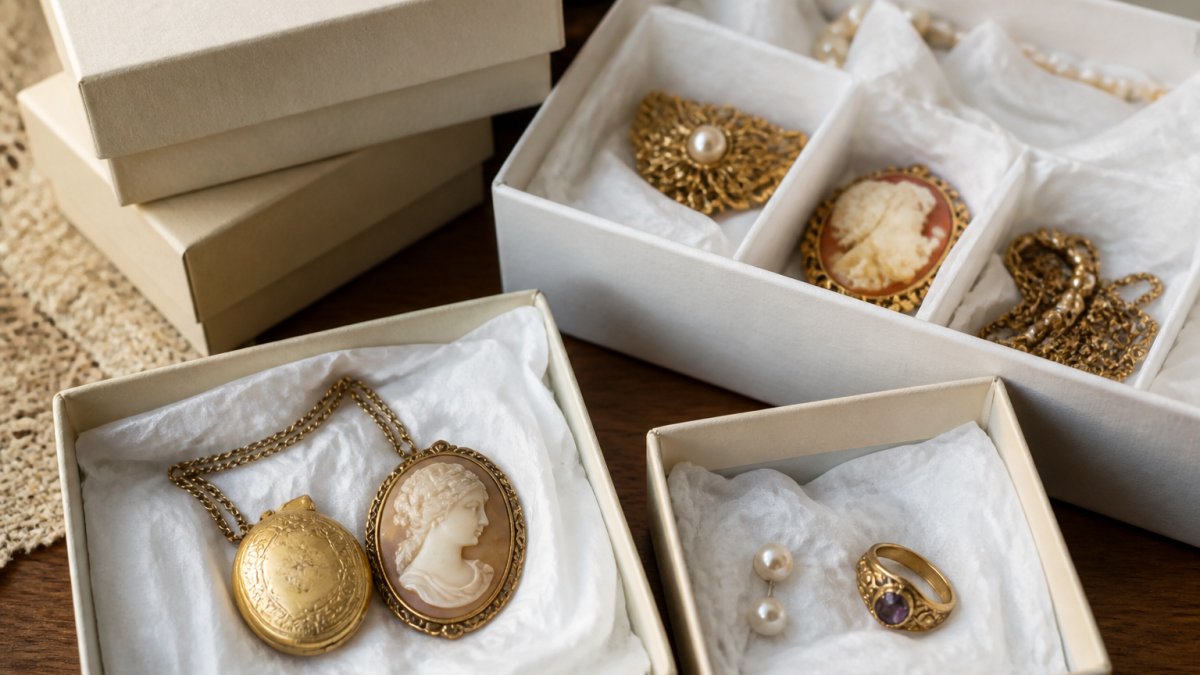
Store jewelry in a dark location (closed drawer, cabinet, or closet) away from windows, heat sources, chemical cleaners, and food storage areas. Use acid-free tissue paper or cotton cloth to wrap individual pieces, preventing scratching and tangling. Avoid plastic bags and regular paper, which trap moisture and contain damaging acids.
Cleaning and Maintaining Family Jewelry
Improper cleaning causes permanent damage. Before cleaning, decide whether you're conserving a piece for historical preservation or restoring it for active wear, these are two different goals with different approaches.
Conservation vs. Restoration: Understanding the Difference
Conservation preserves a piece exactly as it is with minimal intervention, appropriate for historically significant, rare, or irreplaceable pieces. Restoration prepares a piece for wear through thorough cleaning, polishing, and repairs, appropriate for pieces you'll wear regularly. These approaches conflict: heavy polishing removes patina that documents age, and replacing stones changes original composition. Decide which approach fits each piece before beginning maintenance. For most heirlooms, use gentle conservation for storage with selective restoration only for pieces you'll wear regularly.
Basic Cleaning for Gold and Silver
For gold, soak in warm water with mild dish soap for 5-10 minutes, brush gently with a soft toothbrush, rinse, and dry immediately. For silver, use the same method or a silver polishing cloth for light tarnish. For heavy tarnish, soak in baking soda and water (1 tablespoon per cup) for 10-15 minutes. If conserving a piece, skip polishing, tarnish documents age and use. Avoid commercial cleaners unless you're certain they're safe for your specific piece.
Materials to Avoid
Avoid ultrasonic cleaners, steam cleaners, abrasive materials, harsh chemicals, alcohol, and perfume, all damage jewelry. For pieces with delicate gemstones, pearls, opals, or antique settings, skip home cleaning and consult a professional jeweler.
Wearable Preservation: When to Wear Your Heirlooms
Decide whether to wear a piece or store it based on durability and value. Wear-resistant pieces (diamonds, sapphires, rubies in sturdy metal) can be worn regularly. Fragile pieces (opals, pearls, emeralds, antique settings) should be stored and worn rarely. Sentimental but not valuable pieces can be worn freely. High-value pieces should be stored in a safe deposit box or home safe and worn sparingly.
If wearing a piece regularly, remove it during exercise, swimming, gardening, or manual work. Have it professionally cleaned and inspected annually and insured against loss and damage. If storing it, keep it in a cool, dry, dark place and check periodically for condition.
When to Consult a Professional Jeweler
Consult a jeweler if the piece has loose stones, bent or cracked metal, cloudy or chipped gemstones, or if you're unsure about its composition. Choose a jeweler experienced with antique or heirloom pieces and ask for references before committing.
Repurposing Vintage Family Jewelry
Repurposing transforms an unworn heirloom into something you'll wear. A vintage diamond can become a pendant, gold can be redesigned into a bracelet, a brooch becomes a necklace. Work with a jeweler experienced in restoration and redesign to preserve original materials while honoring your personal style. When you wear a repurposed piece, you carry family history with you. Thread & Flame Co creates meaningful necklace gifts that become tomorrow's heirlooms. Consider combining a redesigned family piece with a custom message card that tells the story of its transformation.
Insurance and Appraisal for Heirlooms
Valuable heirlooms need professional appraisal and insurance protection. An appraisal documents value, condition, and characteristics, protecting you financially and creating an official record for your family archives.
Getting a Professional Appraisal
Hire a certified gemologist or professional jeweler with credentials from the American Society of Appraisers (ASA) or American Gem Society (AGS). The appraisal will test metal purity, grade gemstones using the Four Cs, document condition, photograph the piece, and provide a written report with replacement value. This is a one-time investment that protects decades of family history.
Understanding Appraisal Types
There are three types of appraisals, each serving a different purpose:
Insurance appraisal, Estimates replacement cost if the piece is lost, stolen, or damaged. This is what you need for insurance coverage. The appraiser uses current retail prices to determine what it would cost to replace the piece today.
Fair market value appraisal, Estimates what the piece would sell for on the open market. This is lower than replacement cost and is used for tax purposes (if you're donating a piece to charity) or estate planning.
Heirloom or historical appraisal, Documents the piece's age, origin, maker's marks, and historical significance. This is valuable for family archives even if the monetary value is modest. It establishes authenticity and provenance.
For family preservation purposes, get an insurance appraisal. It provides the most comprehensive documentation and protects your financial interests.
Adding Jewelry to Your Insurance Policy
Standard homeowner's or renter's insurance typically caps jewelry coverage at $1,500 to $2,500, regardless of actual value. If your heirloom is worth more, you need additional protection.
Contact your insurance provider and ask about:
Scheduled personal property rider, Lists specific jewelry items with their appraised values. Each piece is individually covered up to its replacement cost. This is the most common option for heirlooms.
Blanket jewelry coverage, Covers all jewelry up to a set limit without listing individual pieces. This works if you have multiple pieces of moderate value.
Standalone jewelry insurance policy, A separate policy from a specialty insurer that covers jewelry specifically. This option is useful if your collection is extensive or extremely valuable.
When you add jewelry to your policy, provide the appraiser's report. The insurance company will use the replacement value to set your coverage limit. Review your policy annually and update it if you acquire new pieces or if appraisals change significantly.
Maintaining Your Appraisal Records
Appraisals are not permanent. Metal and gemstone prices fluctuate. An appraisal from 10 years ago may undervalue your piece significantly.
Update appraisals every 5 to 10 years, or sooner if:
- Metal prices spike (gold and platinum prices change regularly)
- You have the piece repaired or restored
- You acquire a piece with uncertain provenance and want a fresh evaluation
- You're updating your insurance coverage
Store your appraisal documents in a safe place: a safe deposit box at your bank, a home safe, or secure cloud storage. Keep copies with your insurance policy and your family jewelry documentation. If something happens to you, your heirs will know exactly what you owned and what it's worth.
This financial protection is as important as physical preservation. It ensures that your family's heirlooms are protected not just from damage, but from loss and uncertainty.
Passing Down Stories: Intergenerational Storytelling
The greatest value of a family heirloom isn't the metal or gemstones. It's the story. When you pass down jewelry, pass down the narrative too.
Create a story document for each piece. Write about the person who owned it, what it meant to them, and why it matters to your family.
Share these stories with younger family members before you pass the jewelry down. Tell them about their great-grandmother's ring while you show them the piece. Let them hold it.
Consider recording video or audio of yourself telling these stories. Future generations can hear your voice explaining why the piece matters. This creates a richer, more personal archive than written words alone.
When you give a piece to the next generation, give them the documentation too: the written record, the photos, the appraisal, and the story.
This approach to preserve family history jewelry transforms individual pieces into family narrative. The jewelry becomes a tangible link between past, present, and future.
Preserving family history with jewelry requires attention to storage, documentation, and care. But the real work is storytelling. The most valuable heirlooms are those whose stories survive alongside them.
At Thread & Flame Co, we believe jewelry is a language of love. Every piece you create, whether inherited or newly given, carries meaning forward.
Start today. Document one piece. Write its story. Store it safely. Then pass it down with confidence, knowing you've preserved not just an object, but a connection to everyone who came before.
Frequently Asked Questions
What is the best way to preserve family history with jewelry without damaging it?
Preserve family history with jewelry by storing pieces in acid-free materials at stable temperatures (60-70°F) with relative humidity between 30-40%. Keep jewelry away from direct sunlight, heat sources, and moisture. Document each piece's provenance with written records and photographs, and handle items with clean hands or cotton gloves. For valuable or delicate pieces, consult a professional jeweler annually to assess condition and catch damage early.
How do I document the history of a piece of family jewelry?
Create a comprehensive record for each piece by noting the maker's marks, metal type, gemstones, and estimated age. Write down the original owner's name, how the piece was acquired, and any significant life events it represents. Take clear photographs from multiple angles and store images digitally in at least two locations. Include information about repairs or modifications made over time. This documentation becomes invaluable for descendants and insurance purposes.
Can vintage family jewelry be repurposed into new pieces?
Yes, vintage family jewelry can be redesigned and repurposed while preserving its sentimental value. A skilled jeweler can transform outdated settings into modern designs, reset gemstones into new pieces, or combine elements from multiple heirlooms into one meaningful creation. Before repurposing, photograph the original piece and document its history. This approach honors the legacy of the jewelry while making it wearable for the next generation.
Do I need insurance and an appraisal for family heirlooms?
Yes, obtaining a professional appraisal and insuring valuable heirlooms protects your family's investment and ensures financial recovery if loss or damage occurs. Have pieces appraised every 3-5 years, as gemstone and precious metal values fluctuate. Insurance coverage should be documented with photographs, appraisals, and detailed descriptions. This documentation is essential for estate planning and helps descendants understand the true value and significance of pieces they inherit.