

Table of Contents
- Understanding Jewelry Gift Return Policy Basics
- Step 1: Check the Return Window and Timeframe
- Step 2: Verify the Merchandise Condition and Original Packaging
- Step 3: How to Return a Gift Without a Receipt
- Step 4: Personalized Jewelry Return Policy Explained
- Step 5: Understand Jewelry Warranty vs Return Policy
- Step 6: Process Your Return and Track Your Refund
- Step 7: Explore Exchanges and Store Credit Options
Last Updated: August 19, 2026
Understanding Jewelry Gift Return Policy Basics
A jewelry gift return policy is the set of rules governing how and when you can return a piece of jewelry you received as a gift. These policies vary significantly by retailer and typically outline return windows, condition requirements, and refund or store credit options. Personalized, engraved, or final sale items often have stricter restrictions.
At Thread & Flame Co, we recognize that gift-givers invest both money and emotion into selecting the perfect necklace or personalized piece. Understanding the jewelry gift return policy before purchasing gives gift-givers confidence and ensures recipients have options if circumstances change.
Key policy elements include the return window (how many days you have), merchandise condition requirements (unworn and in original packaging), proof of purchase, and whether you'll receive a refund, store credit, or exchange. Personalized or engraved items are often final sale or subject to stricter conditions.
Step 1: Check the Return Window and Timeframe
The return window is the number of days from the purchase date (or receipt date) to initiate a return. Most jewelry retailers offer 30 to 90 days, though some extend to 120 days for holiday purchases. Once this window closes, you lose return rights regardless of condition or reason.
Determine whether the clock starts from the purchase date or receipt date. For gifts ordered well in advance, this distinction matters significantly. If you ordered a necklace in October for a December birthday, a 30-day window might close in November, before the recipient opens the gift.
Some retailers extend return windows during the holiday season or offer special accommodations for gift purchases. Ask whether they allow extended windows for gift-wrapped or future-dated purchases.
Document the purchase date and return deadline clearly. Set a phone reminder for a few days before the window closes to ensure you don't lose return eligibility.
Step 2: Verify the Merchandise Condition and Original Packaging
For a return to be accepted, most jewelry retailers require that the item be in saleable condition: unworn, undamaged, and with all original tags and packaging intact. This protects the retailer's ability to resell the item.
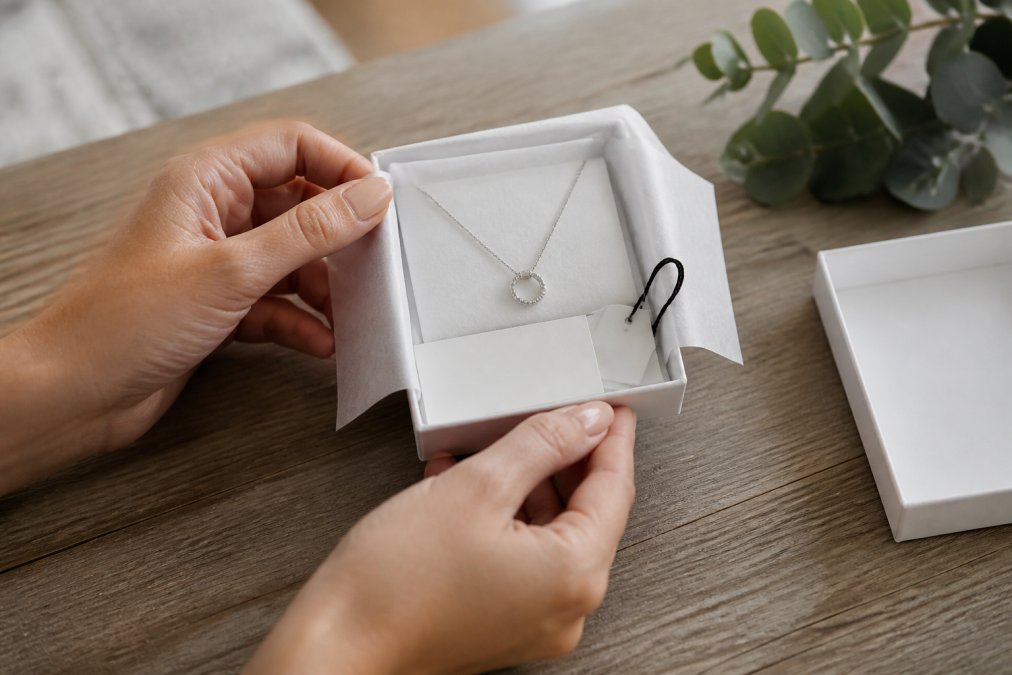
Examine the jewelry under good lighting for any signs of wear, scratches, tarnishing, or damage. Even minor wear can disqualify the item from return eligibility. If you're inspecting a gift, do this as soon as you open it while the item is pristine.
Keep all original packaging, tags, and protective materials. Don't remove security tags, cut labels, or discard the branded box, tissue, or care instructions. Missing components can result in return rejection or reduced refunds.
If the jewelry was custom-engraved or personalized, inspect the engraving carefully for quality issues. Personalized items are often non-returnable once customized, so this is your only opportunity to identify problems.
Confirm whether your gift is marked as "final sale." Final sale jewelry cannot be returned under any circumstances, regardless of condition.
Step 3: How to Return a Gift Without a Receipt
Returning a gift without a receipt is possible but requires a different approach. Most retailers ask for proof of purchase: an order confirmation email, credit card statement, or gift receipt.
Many retailers offer a gift receipt option at checkout, which includes purchase information without showing the price. Ask the gift-giver whether they have the gift receipt or original order confirmation email.
If no receipt exists, contact customer service with specific details: product name, SKU, color, size, and approximate purchase date. Provide any identifying information visible on the jewelry itself, including engraving or serial numbers. The retailer may locate the original order using these details and the gift-giver's name or email.
Some retailers allow returns based on the original payment method. If the gift was purchased with a credit or debit card, the retailer can sometimes verify the transaction through card details.
For online retailers, initiate returns through your account or by contacting customer service. Provide as much detail as possible about the purchase. Most retailers process these requests within 24-48 hours.
Step 4: Personalized Jewelry Return Policy Explained
Personalized jewelry, including custom-engraved necklaces or monogrammed pieces, operates under stricter return rules than standard jewelry. Because personalization is specific to the recipient, these items are often final sale or subject to limited return eligibility.
Many retailers, including Thread & Flame Co, mark personalized items as non-returnable once customization is complete. A necklace engraved with initials or a custom message can't be resold and loses its resale value once personalized.
However, some retailers distinguish between personalization types. A necklace with a custom message card might be returnable if the card is never opened, while an engraved piece is final sale. Read the specific policy before purchasing. If unclear, contact the retailer to confirm return rights.
If you receive a personalized gift with a defect, broken clasp, tarnishing, incorrect engraving, or quality issue, most retailers honor returns or exchanges for defective merchandise, even if personalization is normally final sale. Document defects with photos and contact customer service immediately.
For returnable personalized jewelry, the same merchandise condition requirements apply: unworn, in original packaging, with all tags attached.
Step 5: Understand Jewelry Warranty vs Return Policy
A jewelry warranty and a return policy are two separate protections. A return policy allows you to send back an unwanted or unsuitable item within a specific timeframe for a refund, exchange, or store credit. A warranty covers manufacturing defects and quality issues, typically lasting 1-2 years from purchase.
If you receive a necklace and the clasp breaks within the warranty period, you're covered under warranty for repair or replacement at no cost. If you wear it for a month and decide you don't like it, you need the return policy, only if you're within the return window and the item is in saleable condition.
Warranties often have conditions. Many require that you return the item for inspection and repair rather than receiving an immediate replacement. Some exclude damage from accidents, improper care, or normal wear.
If unsure whether an issue falls under warranty or return policy, contact customer service. A broken clasp within the warranty period is a repair issue; a necklace that doesn't fit your style is a return issue.
Step 6: Process Your Return and Track Your Refund
Once you've confirmed eligibility and prepared the jewelry for return, the process is straightforward. Most retailers provide a return authorization number and shipping label through their website or customer service.

Log into your retailer's website and navigate to your order history. Select the return option and specify the reason: "doesn't fit," "changed mind," "defective," or similar. Honest feedback helps the retailer understand customer needs.
Print the prepaid shipping label provided by the retailer. This typically covers return shipping costs. If not provided, ask whether the retailer covers return shipping or charges a restocking fee.
Pack the jewelry securely in its original packaging. Use a sturdy box and include a packing slip or return authorization number inside. Mail using a tracked service to monitor progress.
Once the retailer receives and inspects your return, they'll process the refund within 5-10 business days, though peak seasons may extend this to 2-3 weeks. The refund credits to your original payment method.
Track your return shipment using the tracking number on your label. Keep documentation until the refund appears in your account.
Step 7: Explore Exchanges and Store Credit Options
Not every return results in a refund. Many retailers offer exchanges or store credit as alternatives.
An exchange allows you to return an unwanted item and receive a different piece in its place. If the necklace doesn't fit your style but you love the retailer's other collections, an exchange may be ideal. Exchanges often process faster than refunds and may allow you to upgrade to a higher-priced item by paying the difference.
Store credit is a balance on your retailer account for future purchases. Some retailers offer store credit at full refund value, while others offer a slightly higher amount as an incentive. If you anticipate buying from the retailer again, store credit can be advantageous.
For gift purchases, exchanges are particularly valuable. If the recipient loves the retailer but the specific necklace isn't quite right, an exchange lets them choose a replacement that better suits their taste.
Some retailers impose restrictions on exchanges. Personalized items may not be exchangeable even if returnable. Final sale items typically can't be exchanged. Confirm exchange eligibility before purchasing.
Store credit often expires within 1-2 years. Use it within this window or lose the balance. If unsure whether you'll use store credit, a refund is safer. However, repeat customers maximize value with store credit.
Ask the retailer which option, refund, exchange, or store credit, best suits your situation. Many customer service teams will explain the benefits of each.
Navigating a jewelry gift return policy is straightforward if you understand the key steps upfront. Confirm the return window and condition requirements immediately after receiving a gift. Verify the item is unworn and in original packaging, document purchase details, and initiate your return within the allowed timeframe. For personalized jewelry, recognize that these items often have stricter policies, sometimes final sale, so confirm eligibility before purchase.
At Thread & Flame Co, we believe that meaningful necklace gifts and custom message card jewelry should bring joy, not stress. Our transparent return policies and customer service team support both gift-givers and recipients through the entire process. Explore our collections with confidence knowing that your purchase is backed by clear, customer-friendly policies.
Frequently Asked Questions
Can you return something that was a gift without a receipt?
Yes, most retailers accept gift returns without a receipt if you have a gift receipt or proof of purchase from the original payment method. If neither is available, ask about alternative documentation such as a bank or credit card statement showing the transaction. Some brands offer store credit as an alternative to refunds when you lack proof of purchase. Always contact customer service with your order details or the approximate purchase date to explore options.
What is the standard return window for jewelry gifts?
Most jewelry retailers offer a 30 to 60-day return window from the purchase date, though some extend to 90 days for gift purchases. The exact timeframe depends on the brand's specific return policy. Always check the retailer's policy before or immediately after receiving the gift. For personalized or custom jewelry, the window may be shorter or non-existent due to the custom nature of the item. Keep documentation of the purchase date to ensure you return within the eligible timeframe.
Can you return personalized jewelry if it was a gift?
Personalized jewelry returns depend entirely on the brand's policy. Many retailers classify custom or engraved items as final sale due to their unique nature, meaning they cannot be returned. However, some brands accept returns if the item is unworn, in original packaging, and returned within their standard return window. Before purchasing personalized jewelry as a gift, verify the return policy with the retailer. If the gift doesn't meet expectations, contact customer service immediately to discuss your options, such as exchanges or store credit.
What is the difference between a jewelry warranty and a return policy?
A jewelry warranty covers defects in materials or craftsmanship for a specified period, typically one to two years. It protects against manufacturing flaws but does not cover damage from wear, misuse, or personal preference. A return policy allows you to exchange or refund an item within a set timeframe if you change your mind or the item doesn't meet expectations. Warranties focus on product quality assurance, while return policies address customer satisfaction and buyer's remorse. Always review both your warranty coverage and return policy eligibility when receiving jewelry gifts.
This article was written using GrandRanker