

Table of Contents
- Why Delicate Necklaces Tangle and How to Prevent It
- Necklace Storage Ideas for Maximum Organization
- How to Store Necklaces in a Jewelry Box Without Tangling
- How to Pack Necklaces for Travel to Keep Them Tangle-Free
- Material-Specific Care for Fine Chains and Delicate Jewelry
- Common Storage Mistakes to Avoid
- How to Safely Untangle a Delicate Necklace
- Frequently Asked Questions
Last Updated: October 10, 2026
Why Delicate Necklaces Tangle and How to Prevent It
Delicate necklaces tangle because fine chains easily intertwine when stored loosely or stacked together. The thinner the chain, the more prone it is to knotting.
When necklaces move against each other, their links catch and twist, creating weak points that can damage the chain or clasp. The good news: you can prevent this entirely with the right storage method.
At Thread & Flame Co, we know how much sentimental necklaces mean to you. Proper storage protects both the jewelry and the memories attached to it by separating each necklace and keeping it secure.
Necklace Storage Ideas for Maximum Organization
The best way to store delicate necklaces to prevent tangling is to keep each one separate and secure. The right method depends on your space, how often you wear each piece, and your budget.
Comparison of Storage Methods by Use Case
Each storage method excels in different situations. Here's how to decide:
Individual Pouches and Compartments offer high protection at low cost. Soft microfiber or velvet pouches prevent scratching and tangling. Best for 5-15 necklaces and travel. Downside: you can't see your collection at a glance. Cost: $0.50-$3 per pouch in bulk.
Hanging Necklaces on Hooks or Holders prioritize visibility and accessibility for 3-8 regularly-worn pieces. Jewelry-specific holders with individual slots prevent tangling better than generic hooks. Downside: takes wall space, exposes necklaces to dust and tarnishing, and works poorly for layered pieces. Cost: $15-$60.
Drawer Storage with Dividers balances organization, protection, and hidden storage for 10-30 pieces. Soft dividers keep necklaces separated and protect from light and dust. Downside: requires a shallow drawer and dividers must stay closed. Cost: $20-$50.
Jewelry Boxes with Built-in Necklace Holders offer all-in-one organization and protection for 5-20 necklaces. Downside: takes up space and you're limited by compartment layout. Cost: $30-$200+.
Choosing the Right Method for Your Collection
Choose pouches for fewer than 5 necklaces, a wall-mounted holder for 3-5 regularly-worn pieces, a compartmentalized jewelry box for 10+ necklaces, and pouches for frequent travel.
Using Individual Pouches and Compartments
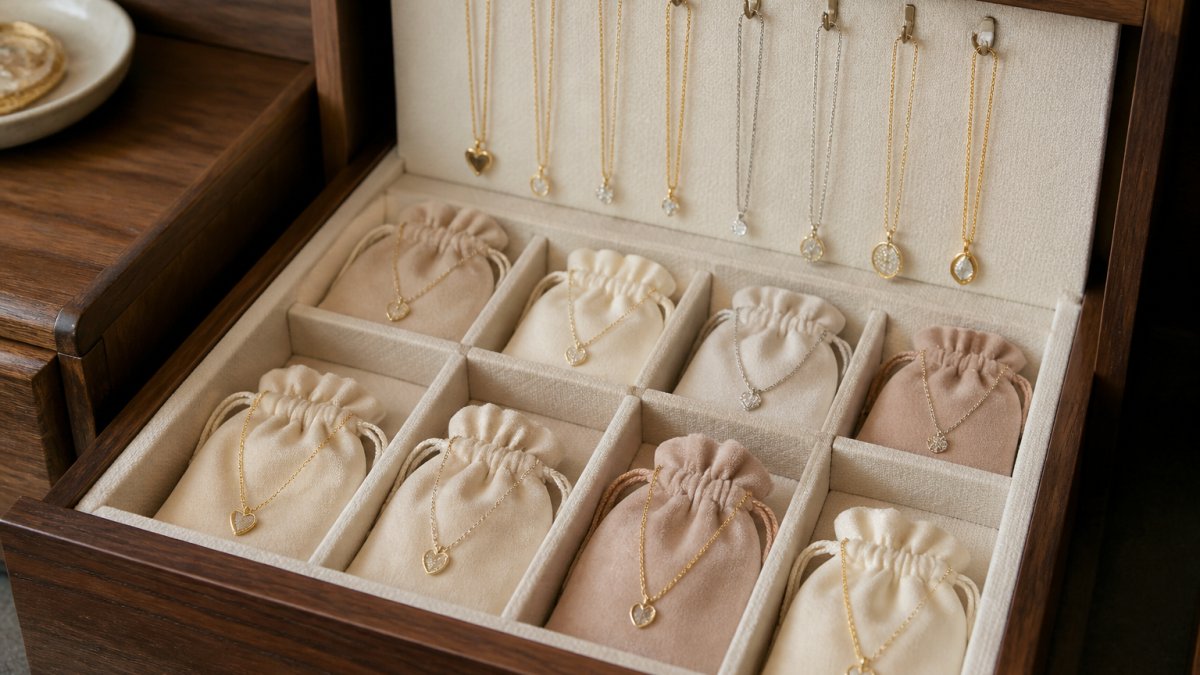
Individual pouches are one of the simplest ways to store delicate necklaces. Each necklace gets its own small bag, preventing contact with other pieces. Look for pouches made from microfiber or soft fabric, these won't scratch delicate chains or precious metals. Store pouches in a drawer or small box. Compartmentalized jewelry boxes offer built-in organization, with each compartment holding one necklace to prevent intertwining.
Hanging Necklaces on Decorative Hooks and Holders
Hanging necklaces on a dedicated holder keeps them visible and accessible for regularly-worn pieces. Choose a holder designed for jewelry with smooth surfaces and proper spacing. Wall-mounted hooks or stands are space-saving options that keep chains straight. Ensure hooks are secure and won't damage the clasp.
Storing in a Drawer with Dividers
A drawer with dividers provides organized, hidden storage. Use soft dividers or fabric liners to prevent scratching. Shallow drawers let you see all necklaces at once. Avoid overstuffing, which can cause tangling despite dividers.
How to Store Necklaces in a Jewelry Box Without Tangling
A jewelry box designed for necklaces offers protection and organization in one piece. The right box keeps your delicate necklaces safe from tangling, tarnishing, and damage.
Choosing the Right Jewelry Box
Look for a jewelry box with dedicated necklace storage, some have hooks in the lid, others have dividers for laying necklaces flat. Choose a size appropriate for your collection to prevent crowding or shifting. Soft interiors (velvet, microfiber, or linen) protect delicate chains; avoid plastic or hard materials. Extra padding protects gemstones and pendants.
Organizing Chains by Length and Type
Sort necklaces by length and chain type before storing. Store longer necklaces in the main compartment and shorter chains separately. Hang one necklace per hook, never double up. Give pendants extra space to prevent stress on the clasp and scratching.
How to Pack Necklaces for Travel to Keep Them Tangle-Free
Travel poses unique challenges for delicate necklaces. Movement during transit can tangle even well-organized chains. Proper packing protects your jewelry and keeps it tangle-free while you're away.
DIY Travel Packing Method Using Household Items
You don't need an expensive travel jewelry bag. This tested method uses household items and takes about 10 minutes.
What you'll need:
- Small ziplock bags (sandwich or snack size)
- Soft cloth or tissue paper
- A small container or pouch (a glasses case, small makeup bag, or even a clean sock works)
- Painter's tape or masking tape (optional, but helpful)
Step-by-step packing process:
-
Lay out all necklaces you plan to bring. Choose only what you'll actually wear to minimize tangling risk and luggage weight.
-
Secure each clasp before packing. This is the most important step. Gently fasten each necklace's clasp so the chain forms a closed loop. This prevents the chain from unraveling or shifting during movement. If a clasp is difficult to fasten, use a small piece of painter's tape to hold it closed temporarily, remove it when you arrive.
-
Wrap each necklace individually. Lay one necklace flat on soft cloth or tissue paper (about 6 inches square). Gently fold the cloth around it, keeping the chain in its natural shape.
-
Place wrapped necklaces in individual ziplock bags. Slide each wrapped necklace into a small ziplock bag and seal it. The bag protects against moisture and keeps the cloth from shifting. If you have multiple necklaces, use one bag per necklace, never stack them together in a single bag.
-
Arrange bags in your travel container. Place sealed bags in a small container, arranging them flat without overlapping.
-
Pack the container in the center of your luggage. Surround your jewelry container with soft items like rolled clothing to cushion it and prevent shifting.
-
Never pack jewelry in checked luggage. Checked bags experience more movement, pressure, and temperature changes. Always carry your jewelry in your personal item or carry-on bag where you can monitor it.
Alternative DIY Travel Solution: The Straw Method
For extremely delicate or layered necklaces, thread the chain through a plastic drinking straw (cut to length), then fasten the clasp. The straw keeps the chain rigid. Wrap in soft cloth and pack as described. This adds minimal weight and works well for fine chains.
Choosing a Travel Jewelry Bag
A dedicated travel jewelry bag offers convenience with multiple compartments and soft padding. Choose one with a secure zipper closure that fits in a carry-on. Individual slots prevent movement between pieces. Specialized bags cost $20-$50; budget options ($10-$15) work for casual travel if they have soft interiors and secure closures.
Packing Layered and Multi-Strand Necklaces
Layered necklaces and multi-strand pieces require extra care during travel. Each strand must be secured separately to prevent tangling between layers.
For layered necklaces, fasten each strand's clasp individually before packing. Wrap each strand separately in soft cloth, keeping them in their natural layered position. Place all strands from one necklace in a single ziplock bag so they stay together but don't shift against each other.
For multi-strand pieces with a shared clasp, wrap the entire piece gently without pulling the strands apart. The key is keeping the necklace in its intended configuration, don't flatten or compress it. Use a slightly larger ziplock bag or small pouch to accommodate the extra bulk.
What to Do When You Arrive
Unpack your necklaces as soon as you reach your destination. Remove them from ziplock bags and cloth wrapping immediately. Lay them flat on a clean surface and inspect for any tangling or damage. If a clasp is still taped, gently remove the tape. Store necklaces in your hotel room's safe or in a drawer if available, using the same separation methods you use at home.
Before packing for your return trip, repeat the wrapping and securing process. Don't assume necklaces are still in the same condition they were when you arrived, movement during sightseeing or activities can shift chains, so rewrap them carefully.
Material-Specific Care for Fine Chains and Delicate Jewelry
Different metals and chain types require slightly different storage approaches. Understanding your necklace's material helps you choose the best storage method and prevent damage.
Gold chains are durable but can scratch if stored carelessly. Store gold necklaces separately in soft pouches or individual compartments. Gold doesn't tarnish, but it can lose shine if exposed to harsh conditions.
Silver and sterling silver chains tarnish when exposed to air and moisture. Store silver necklaces in airtight pouches or a jewelry box with a tarnish-resistant lining.
Delicate white gold or platinum chains need gentle handling. These metals are softer than yellow gold and more prone to bending.
Common Storage Mistakes to Avoid
Many people unknowingly damage their delicate necklaces through improper storage. Knowing what not to do protects your jewelry.
Never store necklaces tangled together, hoping to untangle them later. The longer chains stay knotted, the harder they are to separate.
Avoid storing necklaces in plastic bags without padding. Plastic can stick to metal and create static that attracts dust.
Don't hang all necklaces on a single hook or holder. This causes them to tangle and puts stress on individual clasps. Each necklace needs its own dedicated space.
Keep necklaces away from moisture and humidity. Damp storage areas promote tarnishing and can damage delicate chains. Avoid storing jewelry in bathrooms or near windows where moisture accumulates.
How to Safely Untangle a Delicate Necklace
Despite best efforts, necklaces sometimes tangle. Knowing how to safely untangle a delicate chain prevents damage and frustration.
Lay the tangled necklace on a clean, flat surface. Use good lighting so you can see the knots clearly.
Apply a tiny amount of oil or lotion to the tangled area.
Use a fine-tooth comb or a small needle to gently work the knot apart. Start from the outside of the knot and work inward.
Once the chain is loose, rinse away any oil with warm water and mild soap. Dry thoroughly before storing.
Keeping your delicate necklaces organized and tangle-free requires the right storage method and a little planning.
Frequently Asked Questions
What is the best way to store delicate necklaces so they don't tangle?
The best approach combines separation and support. Store each necklace individually in its own pouch or compartment, clasp the ends together before storing, and keep chains separated by length. For fine chains, use soft fabric pouches rather than plastic bags, which can cause friction. Hanging necklaces on hooks or a decorative holder also works well if you have the wall space. The key is preventing metal-to-metal contact that causes intertwining.
Is it okay to store jewelry in ziplock bags?
Ziplock bags work in a pinch for short-term storage, but they're not ideal for delicate necklaces long-term. Plastic can trap moisture and cause tarnishing on sterling silver and other metals. If you use plastic bags, ensure each necklace is stored separately with the clasp secured. For better protection, choose soft fabric pouches designed for jewelry instead, which allow air circulation and prevent moisture buildup while keeping chains from tangling.
How do you pack necklaces for travel to prevent tangling?
Wrap each necklace individually in soft cloth or tissue paper, then secure the clasp by fastening the ends together. Place wrapped necklaces in separate compartments of a travel jewelry bag or small pouches. Alternatively, lay necklaces flat on a piece of plastic wrap, clasp each one, and roll them gently before packing. Keep longer chains and delicate fine chains in their own sections away from heavier pendants. This method protects both from tangling and from damage during transport.
What's the difference between storing necklaces on hooks versus in a jewelry box?
Hanging necklaces on hooks or a decorative holder keeps them visible, easily accessible, and completely separate, ideal for pieces you wear regularly. Jewelry boxes with compartments work better for protecting necklaces from dust and sunlight while saving space. Fine chains and delicate jewelry benefit from box storage with dividers to prevent tarnishing. Choose hooks for display and frequent-wear pieces, and boxes for special occasion necklaces, sentimental gifts, or items you wear less often.