

Table of Contents
- Gold-Plated vs Sterling Silver: Key Differences at a Glance
- What is 925 Sterling Silver?
- Understanding Gold-Plated Jewelry and Gold Vermeil
- Durability and Longevity: Which Metal Lasts Longer?
- Best Jewelry Metals for Sensitive Skin
- How to Clean Sterling Silver Necklaces and Maintain Gold-Plated Pieces
- Is Gold-Plated Jewelry Good for Daily Wear?
- Cost-Benefit Analysis: Which Metal Offers Better Value as a Gift?
- Frequently Asked Questions
Last Updated: September 30, 2026
Gold-Plated vs Sterling Silver: Key Differences at a Glance
When choosing a meaningful necklace gift, understanding the difference between gold plated vs sterling silver matters more than you might think. One metal will tarnish within months of daily wear. The other can last decades with basic care. One costs a fraction of what the other does. Yet both can look equally stunning on the day you give them.
The choice isn't about finding the "better" metal, it's about matching the right metal to how the person you're gifting will actually wear it.
Here's what separates them: 925 sterling silver is a precious metal alloy containing 92.5% pure silver. Gold-plated jewelry is a base metal (usually brass or copper) coated with a thin layer of gold through electroplating. The difference in durability, cost, and longevity flows directly from that fundamental construction.
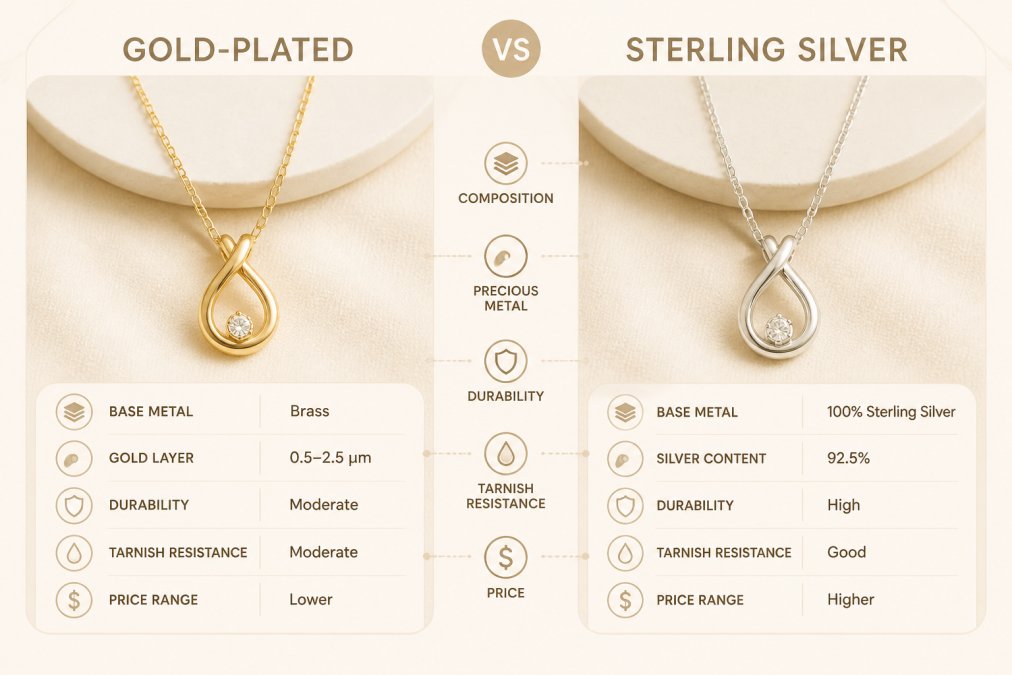
| Feature | Gold-Plated | Sterling Silver |
|---|---|---|
| Metal composition | Base metal + gold layer | 92.5% pure silver alloy |
| Durability for daily wear | 6-18 months with care | 5-10+ years with care |
| Tarnishing | Fades gradually | Can tarnish, but polishable |
| Best for | Occasional wear, fashion pieces | Heirloom gifts, daily wear |
| Price point | Budget-friendly | Higher investment |
| Hypoallergenic | Depends on base metal | Typically hypoallergenic |
The real decision comes down to one question: Will the person wearing this necklace treat it as an everyday piece or save it for special occasions? That answer determines which metal makes sense.
What is 925 Sterling Silver?
925 sterling silver is a precious metal alloy made from 92.5% pure silver mixed with 7.5% other metals (typically copper) to increase durability and strength.
The "925" hallmark stamped on sterling silver jewelry certifies the metal's purity and is the recognized standard for fine silver jewelry in the United States and internationally.
Sterling silver develops a natural patina over time, a thin layer of oxidation that darkens the metal. This isn't damage; it's a natural aging process. Many appreciate the vintage character; others prefer to polish it away. Both approaches work.
Sterling silver is hypoallergenic for most people, provided the 7.5% alloy uses copper or other non-nickel metals rather than nickel-containing brass.
Sterling silver holds intrinsic investment value as a precious metal, unlike gold-plated jewelry.
Understanding Gold-Plated Jewelry and Gold Vermeil
Gold-plated jewelry consists of a base metal (typically brass, copper, or stainless steel) coated with a thin layer of gold through electroplating. The gold layer is typically 0.5 to 2.5 microns thick, microscopically thin, compared to a human hair at about 70 microns.
Because the gold layer is so thin, it wears away with time, friction, sweat, and contact with other surfaces. This isn't a defect, gold-plated jewelry is engineered to be temporary.
Gold vermeil uses sterling silver as the base metal with a minimum gold layer thickness of 2.5 microns, making it more durable than standard gold plating. When the gold wears away, you're left with hypoallergenic sterling silver rather than reactive brass.
The distinction matters for gift-giving. A gold vermeil necklace from a quality maker like AJ Luxe, which specializes in demi-fine vermeil jewelry, will last noticeably longer than standard gold plating over brass. If you're investing in a gift you hope will last years, vermeil is the gold-plated option worth considering.
Gold-plated jewelry costs significantly less than sterling silver or solid gold, making it accessible for budget-conscious gift-givers. It also offers fashion-forward designs that may not exist in sterling silver. If you want a trendy style at an entry-level price, gold-plated pieces from retailers like GIVA, which offers affordable gold-plated designs, deliver on that promise.
Durability and Longevity: Which Metal Lasts Longer?
Sterling silver wins the durability comparison decisively. A well-maintained sterling silver necklace can last a lifetime, decades of daily wear without the metal degrading.
Gold-plated jewelry typically lasts 6 to 18 months with regular care, but this timeline varies dramatically based on individual skin chemistry.
The Role of Skin pH in Plating Wear
Gold plating fails faster on people with acidic skin (pH 4.5-5.5). Those who sweat heavily or have naturally acidic skin may see visible wear within 3-4 months of daily wear, while others might stretch it to 12-15 months.
Gold-plated jewelry performs better on people who wear it occasionally, reducing exposure to acidic skin conditions and sweat.
Sterling silver is unaffected by skin acidity. Tarnishing occurs from exposure to sulfur compounds in air, not skin contact, making it predictably durable regardless of the wearer's skin chemistry.
Wear Patterns and Friction
Mechanical wear also accelerates gold plating failure. Heavy daily wear, friction from clothing, contact with other jewelry, and water exposure all thin the gold layer. Necklaces worn during exercise degrade faster than those worn during office work.
Sterling silver requires maintenance but doesn't degrade like gold plating. Tarnishing is reversible, a tarnished necklace returns to brightness with polishing.
Planning for Longevity
For heirloom gifts or active lifestyles, sterling silver is the clear choice. Gold-plated jewelry will show visible wear within months in those contexts.
For occasional-wear pieces, gold-plated jewelry can last several years if removed before activities that accelerate wear. Set realistic expectations based on the recipient's lifestyle and skin chemistry.
Best Jewelry Metals for Sensitive Skin
925 sterling silver is naturally hypoallergenic for most people, making it the safer choice for those with known metal sensitivities, provided the 7.5% alloy uses copper or other non-nickel metals.
Gold-plated jewelry's safety depends on its base metal. If it's nickel-containing brass, someone with nickel sensitivity will react as the gold layer wears away. Gold vermeil, with its sterling silver base, is safer for sensitive skin.
Stainless steel offers another hypoallergenic option if you're exploring alternatives. The Steel Shop specializes in 316L stainless steel jewelry designed for sensitive skin, providing a durable, tarnish-resistant option that won't cause reactions.
If you're unsure about the recipient's skin sensitivities, sterling silver is the safest bet. It's the metal dermatologists recommend most often for people with metal allergies.
How to Clean Sterling Silver Necklaces and Maintain Gold-Plated Pieces
Sterling silver tarnishes naturally when exposed to air and sulfur compounds, but tarnish is cosmetic and reversible.
For sterling silver: Use a soft microfiber polishing cloth or a baking soda and water paste for stubborn tarnish. Store in airtight bags to slow tarnishing. Regular wear naturally polishes the surface.
Avoid harsh chemicals, ultrasonic cleaners, and abrasive scrubbing. These can scratch the surface or damage any gemstones set in the necklace.
For gold-plated jewelry: Remove before showering, swimming, or exercising. Store in a dry place away from humidity. Clean gently with a soft, slightly damp cloth, avoid polishing cloths or sterling silver cleaners.
When gold plating fades, you can accept the vintage look or have it professionally replated ($25-$75). For inexpensive pieces, replating may cost more than replacement.
Is Gold-Plated Jewelry Good for Daily Wear?
Gold-plated jewelry is not ideal for daily wear, despite its popularity. The thin gold layer simply won't survive constant friction, moisture, and contact with skin and clothing.
If someone you're gifting loves a particular gold-plated design and will wear it daily anyway, set expectations clearly. They should understand the piece will show wear within months and plan accordingly, either accept the vintage aesthetic as it fades or budget for eventual replating.
For daily-wear gifts, sterling silver or gold vermeil are better choices. They're designed to withstand regular wear without degrading. The investment upfront pays off in longevity.
Gold-plated jewelry excels as a special-occasion piece or fashion accessory worn a few times monthly. In that context, it can last years and deliver genuine value. The key is matching the metal to the wearing pattern, not forcing gold plating into a daily-wear role it wasn't engineered for.
Cost-Benefit Analysis: Which Metal Offers Better Value as a Gift?
Gold-plated jewelry costs less upfront, often 60-80% less than comparable sterling silver pieces. If your budget is tight and you want to give something meaningful, gold plating makes the math work.
But cost-per-wear tells a different story. A $40 gold-plated necklace that lasts 12 months of occasional wear costs about $3.33 per month. A $120 sterling silver necklace worn regularly for 10 years costs about $1 per month. The sterling silver becomes the better value over time.
The Hidden Cost of Replating
Many gift-givers don't account for replating costs when calculating long-term value.
The Message You Send With Material Choice
Matching Material to Occasion
Frequently Asked Questions
Does gold-plated jewelry tarnish faster than sterling silver?
Gold-plated jewelry can fade or wear away with frequent wear and exposure to moisture, but it doesn't tarnish the same way sterling silver does. Sterling silver develops tarnish (a dark oxidation layer) over time when exposed to air and humidity, though this is easily removed with polishing. Gold-plated items lose their gold layer gradually through friction and wear, revealing the base metal underneath. For occasional wear, gold-plated holds up well; for daily wear, sterling silver typically maintains its appearance longer with proper care.
Is sterling silver a better gift than gold-plated jewelry?
Sterling silver makes a better long-term gift if the recipient wears jewelry regularly or values durability and investment. It resists fading and holds intrinsic value. Gold-plated jewelry is ideal if you want an affordable, visually striking gift for someone who wears jewelry occasionally or prefers not to maintain precious metals. Consider the recipient's lifestyle, skin sensitivity, and how often they wear jewelry when deciding between the two.
What's the difference between gold-plated and gold vermeil jewelry?
Gold vermeil is gold-plated jewelry with a specific standard: a thicker gold layer (at least 2.5 microns) applied over sterling silver rather than cheaper base metals. Vermeil offers better durability than standard gold plating and costs less than solid gold. Standard gold-plated jewelry uses a thinner gold layer over brass or other alloys, making it more affordable but less long-lasting. If durability matters for your gift, vermeil provides a middle ground between pure gold and basic plating.
How do I care for a gold-plated necklace gift to make it last longer?
Keep gold-plated necklaces dry by removing them before swimming, showering, or exercising. Store them in a dry place away from humidity and direct sunlight. Avoid exposing them to perfume, lotions, or cleaning products, which can accelerate fading. Clean gently with a soft, dry cloth when needed. With these precautions, gold-plated jewelry can maintain its appearance for several years. If the plating eventually wears away, replating services are available but add to the overall cost of ownership.