

Table of Contents
- Why Custom Message Cards Matter for Jewelry Gifts
- Jewelry Message Card Templates: Getting Started
- How to Design Jewelry Backing Cards That Tell Your Story
- DIY Jewelry Display Card Ideas for Maximum Impact
- Inspirational Quotes for Jewelry Cards That Resonate
- Printing Techniques for Professional Results
- Creating the Complete Gift Experience: Packaging and Presentation
- Conclusion
Last Updated: August 10, 2026
Why Custom Message Cards Matter for Jewelry Gifts
When you give jewelry, you're not just giving an object, you're giving a moment someone will remember. A custom message card jewelry accompaniment transforms that gift from beautiful to meaningful.
At Thread & Flame Co, we've watched thousands of gift-givers struggle with the same question: how do you make a piece of jewelry feel personal? The answer isn't more expensive metal or bigger stones. It's the story you tell alongside the gift. A thoughtfully designed custom message card explains why you chose this piece and captures what the recipient means to you.
Recipients don't just wear the jewelry, they remember the message. They show it to friends. They keep the card long after the wrapping paper is gone. Your gift stops being a transaction and becomes a conversation between you and someone you love.
Jewelry Message Card Templates: Getting Started
A template gives you structure without limiting creativity. The best jewelry message card templates balance professional polish with personal warmth.
Start by considering what your template needs to accomplish: introduce the piece, tell a story about why you chose it, and close with an emotional anchor. This three-part structure mirrors how people actually read, they skim the opening, engage with the story, and linger on the closing.
Most effective templates follow a simple format: a header with the piece name or meaningful title, 2-4 sentences of personalized message, and a closing line that ties the gift to the relationship.
Choosing the Right Card Material and Thickness
Your card material sets the tone before anyone reads a word. Standard cardstock for jewelry cards runs 80-110 pound (lb) weight. For most custom message card jewelry designs, 100 lb cardstock is the sweet spot, it feels substantial without being unwieldy.
Matte finishes feel premium and photograph well. Textured cardstock (linen, felt, or laid finishes) adds tactile interest. For a gift meant to be treasured, the texture matters, it's something the recipient will touch repeatedly.
Sustainable options have improved dramatically. Recycled cardstock, tree-free alternatives like bamboo or cotton fiber, and FSC-certified materials all deliver professional results. They cost slightly more but align with the sentiment of the gift.
Standard Dimensions and Layout Best Practices
Most jewelry display cards measure 3.5 x 5 inches (standard postcard size) or 4 x 6 inches. These dimensions fit standard packaging and give you enough space for meaningful text without overwhelming the design.
Layout follows a visual hierarchy. Place your strongest element near the top third, where the eye lands first. The body text occupies the middle. The closing anchors the bottom.
White space is your ally. Leave margins of at least 0.5 inches on all sides. Left-aligned text feels approachable; center-aligned text feels formal. A mix of both (headline centered, body left-aligned) balances warmth with polish.
How to Design Jewelry Backing Cards That Tell Your Story
Effective jewelry backing card design isn't about being fancy, it's about being clear. Your design should make the message easier to read and feel.
Start with intent. Ask yourself: what do I want the recipient to feel when they open this? That emotional goal shapes every design choice.
Design Elements That Build Brand Identity
If you're creating cards for your own jewelry line, consistency builds trust. Use the same color palette across all cards. Stick with 2-3 fonts maximum. Repeat a visual element that becomes recognizable as yours.
Colors carry meaning. Warm golds and creams feel luxurious. Soft pastels feel modern. Deep jewel tones feel sophisticated. Your color choice should reflect your brand and the relationship the gift represents.
Typography matters more than most people realize. Serif fonts feel traditional and elegant. Sans-serif fonts feel clean and modern. Script fonts feel personal but become hard to read at small sizes. For body text, stick with serif or sans-serif. Use script sparingly.
Icons and illustrations should be minimal. A small line, delicate floral element, or geometric shape can add visual interest without distracting from the message.
Personalization and Custom Text Options
The most powerful design element is personalization. The recipient's name, a specific memory, or a custom message transforms a generic card into a keepsake.
Specificity beats sentiment. Instead of "You mean the world to me," try "I'll never forget the day you taught me to be brave." Specific details create emotional resonance.
Consider offering pre-written options alongside the custom field. Providing 3-5 meaningful options gives customers a starting point while still allowing full customization.
DIY Jewelry Display Card Ideas for Maximum Impact
If you're creating your own cards, you have complete control over the experience.
Start with a template you can modify. Free design tools like Canva offer jewelry card templates you can customize with your own colors, fonts, and images. Alternatively, create a simple template in Google Docs or Microsoft Word using a table for layout control.
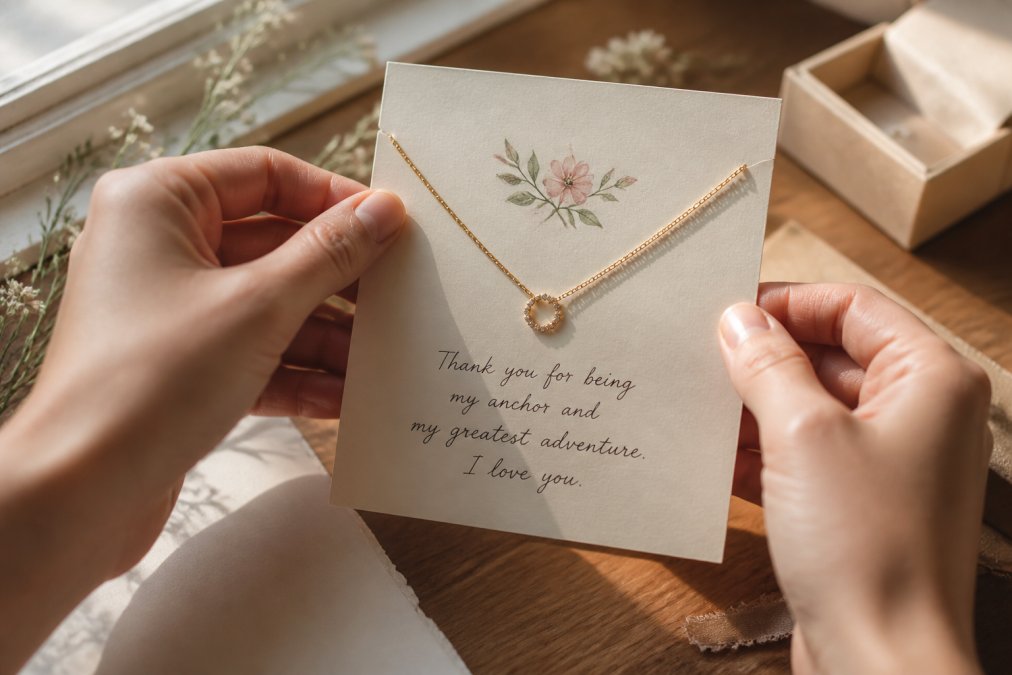
Displaying Necklaces and Earrings Effectively
How you present the jewelry on the card matters. For necklaces, create a slit or slot in the card so the chain drapes naturally. For earrings, small pockets or adhesive dots keep them secure during shipping and display.
The card's visual design should complement the jewelry, not compete with it. If your necklace is delicate and minimal, use plenty of white space and simple typography. The card frames the jewelry; it shouldn't overshadow it.
Sustainable and Eco-Friendly Card Materials
Recycled cardstock uses less energy to produce than virgin cardstock and diverts waste from landfills. The quality is identical, with cost typically 10-20% higher.
Tree-free alternatives like bamboo, hemp, or agricultural waste fibers grow faster than trees and require fewer chemicals to process. They feel premium and tell a story.
FSC (Forest Stewardship Council) certification ensures cardstock comes from responsibly managed forests. Soy-based inks are more sustainable than petroleum-based inks and produce richer colors.
Professional printing, even with shipping, often has a lower environmental footprint than multiple home printing attempts.
Inspirational Quotes for Jewelry Cards That Resonate
A great closing quote elevates the entire card. The best quotes are specific enough to feel personal but universal enough that the recipient will internalize them.
Avoid overused phrases like "Be yourself" or "Follow your dreams." Instead, look for quotes that speak to the specific relationship or moment. For a daughter: "You are braver than you believe, stronger than you seem, and smarter than you think." For a wife: "In you, I found my home."
Quotes from beloved authors, poets, or public figures carry more weight than generic sayings. You can also create original quotes specific to the relationship, these are often the most powerful.
Keep quotes short, two sentences maximum. A single powerful sentence often works best.
Printing Techniques for Professional Results
How you print determines whether your card looks handmade or professional. Both have value, but understanding your options helps you choose intentionally.
Home Printing vs. Professional Printing Services
Home printing gives you complete control and instant results. Modern inkjet printers produce good color quality. The trade-off is cost per card and consistency.
Home printing works well for small batches (fewer than 20 cards) or when the personal, handmade quality is part of the gift's appeal.
Professional printing offers consistency, durability, and volume efficiency. The per-card cost drops significantly with volume. Professional printing makes sense for businesses or when creating more than 50 cards.
A hybrid approach works well: print text and graphics professionally, then add handwritten personalization at home.
Print-Ready Files and Technical Specifications
If you're using professional printing, your file format matters. Most printers accept PDF files. Resolution should be 300 DPI (dots per inch) minimum. Color mode should be CMYK (not RGB).
Bleed is the area outside your intended card edge. Most printers require 0.125 inches of bleed on all sides. Your design file should be larger than your final card size to accommodate this.
When submitting files to a printer, ask for their specific requirements. For home printing, design your card with margins and test print on regular paper first.
Creating the Complete Gift Experience: Packaging and Presentation
The unboxing experience shapes how the recipient remembers the gift. A thoughtfully packaged jewelry gift with its custom message card creates a moment.
Jewelry should arrive in a small box, padded with tissue or crinkle fill. The custom message card should be visible when the box opens, either attached to the inside of the lid or placed prominently on top of the jewelry.
Consider the visual hierarchy of the unboxing. What does the recipient see first? This sequence shapes their emotional response. If the message card is visible immediately, they read it before touching the jewelry, priming them emotionally.
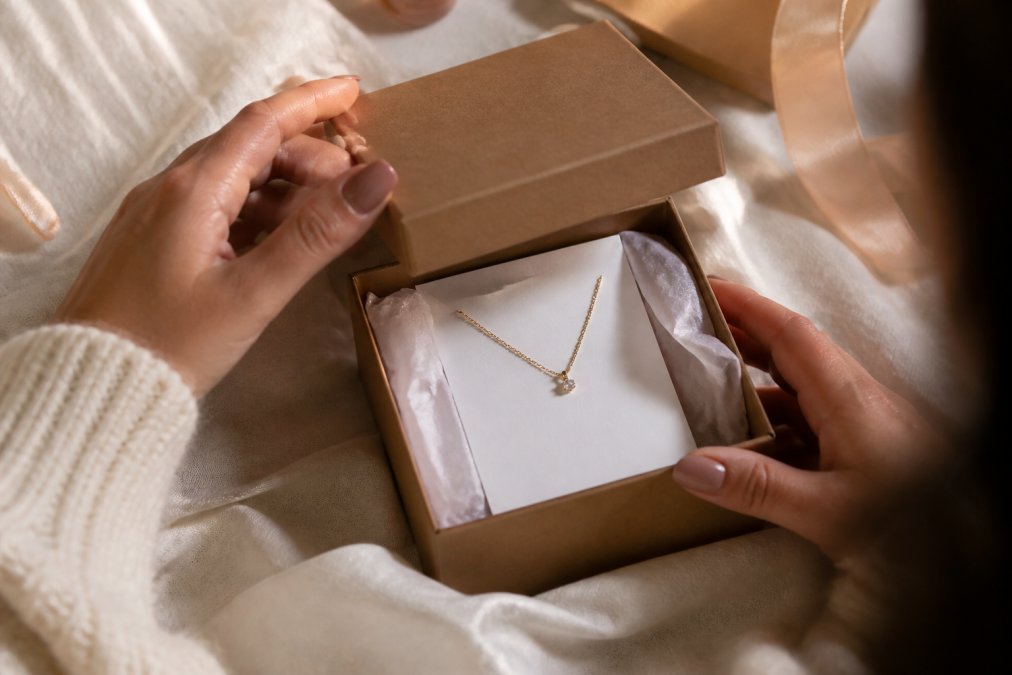
Tissue paper, branded stickers, and small touches signal that care went into this gift. Include a care card alongside the message card to show you want the gift to last.
QR Codes and Digital Storytelling Integration
QR codes bridge the physical and digital. A QR code on the message card can link to a video message from the gift-giver, a photo of the moment that inspired the gift, or the jewelry's story.
Place the QR code subtly in a corner or embed it within a design element. Include text that explains what the code links to: "Scan to hear my message" or "Scan to see the story behind this piece."
The digital content should be short and meaningful. A 30-60 second video message is more powerful than a long explanation. QR codes work particularly well for long-distance gifts, creating presence and connection when you can't deliver in person.
The custom message card is where intention becomes tangible. It's where you move from "I bought you something nice" to "I see you. I understand you. I want you to remember this moment." When you invest in thoughtful design, quality materials, and genuine personalization, every element of the gift tells the same story: you cared enough to get this right. That's what the recipient remembers. That's what they keep.
Frequently Asked Questions
What should a custom message card jewelry say for a gift?
Your message should reflect the relationship and occasion. For mothers, consider heartfelt appreciation: 'To Mom, your strength and grace inspire me every day.' For wives, romantic sentiments work well: 'Forever starts with you.' Keep messages concise (2-3 sentences), personal, and genuine. Include the date or a meaningful phrase that connects to why you chose this specific necklace. The goal is to create an emotional connection that makes the jewelry more than just an accessory, it becomes a keepsake tied to your love and thoughtfulness.
How do I make my own custom jewelry display cards using templates?
Start with a template sized to your card dimensions (typically 2x3 inches for backing cards). Use design software like Canva, Adobe Illustrator, or even Microsoft Word. Add your brand colors, logo, and custom text. Include space for the jewelry item itself, leave the center area uncluttered so the necklace or earrings remain the focal point. Save as a PDF or high-resolution image file (300 DPI minimum for printing). If printing at home, use quality cardstock (65-110 lb weight). For professional results, upload your print-ready file to a printing service. Always preview before printing to check alignment and color accuracy.
Can I use eco-friendly materials for jewelry message cards?
Yes. Recycled cardstock, FSC-certified paper, and plantable seed paper are sustainable options that maintain a professional appearance. Recycled cardstock (65-100 lb) works well for backing cards and displays. Seed paper adds a unique touch, recipients can plant the card after reading your message. These materials typically cost slightly more than standard cardstock but align with growing consumer values around sustainability. They also reinforce your brand's commitment to thoughtful, responsible gift-giving. Check with your printing service about eco-friendly options and lead times, as some sustainable materials require longer production schedules.
What printing technique gives the most professional finish for jewelry cards?
Professional offset or digital printing delivers the best results for custom message cards. Offset printing is ideal for larger quantities and produces vibrant, consistent colors. Digital printing works well for smaller runs and allows easy customization. Both methods handle cardstock weights of 65-110 lbs effectively. For home printing, use an inkjet printer with quality cardstock and glossy or matte finishes. Always print a test copy first. Professional services ensure sharp text, accurate color matching, and proper die-cutting for shaped cards. Factor in 5-7 business days for professional printing, longer for specialty materials or rush orders.
This article was written using GrandRanker