

Table of Contents
- Why Sterling Silver Necklaces Tarnish and Need Regular Care
- Method 1: Gentle Cleaning with Dish Soap and Warm Water
- Method 2: Restore Shine with a Silver-Polishing Cloth
- Method 3: Clean Silver Necklace with Baking Soda and Aluminum Foil
- Method 4: White Vinegar Soak for Light to Moderate Tarnish
- Method 5: Lemon Essential Oil and Witch Hazel Polish
- Method 6: Boiling Water Technique for Heavy Tarnish
- Method 7: Microfiber Cloth Dry Polishing for Maintenance
- Choosing the Right Method by Tarnish Level and Necklace Type
- Cleaning Chain Links, Clasps, and Hard-to-Reach Areas
- Common Cleaning Mistakes and Methods to Avoid
- After-Cleaning Care and Storage
- How Often to Clean and When to Seek Professional Help
- Frequently Asked Questions
Last Updated: October 10, 2026
Sterling silver necklaces are treasured keepsakes, especially when they carry personal meaning. Whether it's a gift from Thread & Flame Co celebrating someone you love or a piece passed down through generations, keeping your silver necklace bright and beautiful matters.
This guide covers seven proven ways to clean sterling silver necklaces at home, each suited to different tarnish levels and necklace types. We'll walk you through safe techniques that protect delicate chains and clasps while bringing back the shine.
Why Sterling Silver Necklaces Tarnish and Need Regular Care
Sterling silver tarnishes because it reacts with sulfur compounds in the air and moisture.
Regular cleaning keeps your necklace looking its best and helps prevent heavy tarnish buildup. Light maintenance every few weeks is easier than deep cleaning later.
Understanding tarnish levels helps you pick the right cleaning method:
- Light tarnish: Gray film, still shiny underneath
- Moderate tarnish: Noticeably darker, some shine lost
- Heavy tarnish: Dark brown or black coating, dull appearance
Each cleaning method works best for a specific tarnish level. Matching the method to your necklace's condition gets better results and protects the piece.
Method 1: Gentle Cleaning with Dish Soap and Warm Water
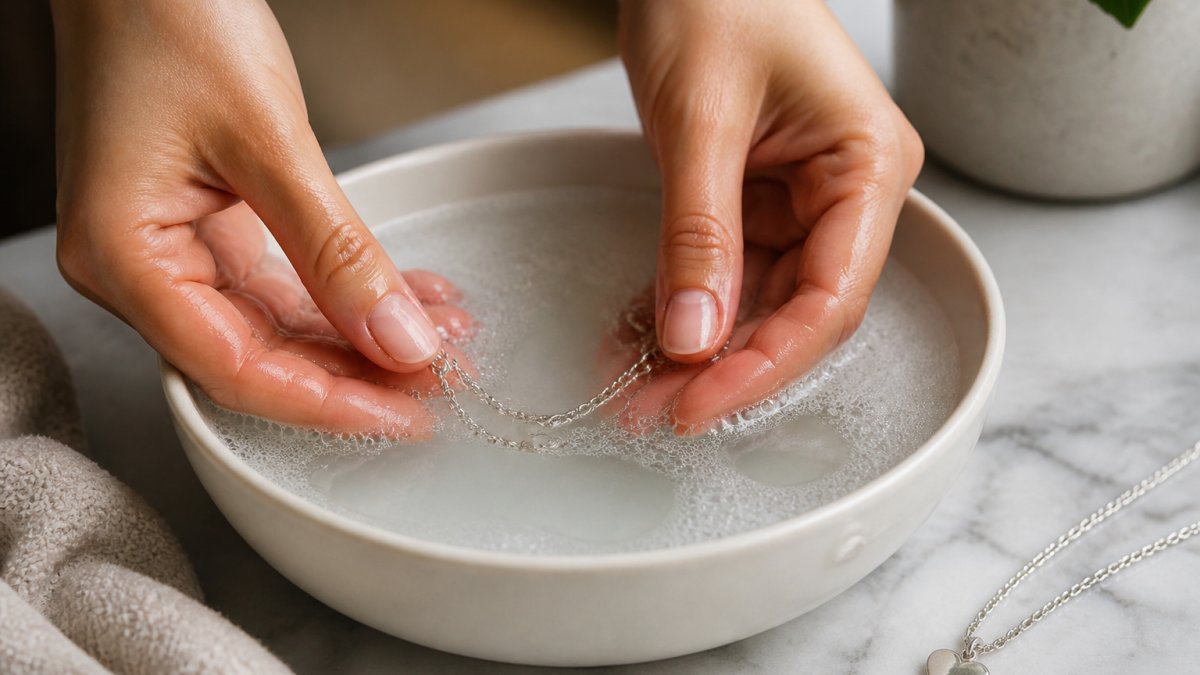
This is the safest method for all necklaces, especially delicate chains and pieces with gemstones or pearls. Warm soapy water removes dirt and light tarnish without harsh chemicals or scrubbing.
What you need:
- Warm (not hot) water
- Mild dish soap
- Soft cloth or soft-bristled brush
Steps:
- Fill a shallow bowl with warm water and add a few drops of dish soap
- Place your necklace in the water and let it soak for 5-10 minutes
- Gently rub the necklace with a soft cloth, paying attention to chain links and the clasp
- Use a soft brush for textured areas or hard-to-reach spots
- Rinse thoroughly under clear running water
- Dry immediately with a clean, soft cloth
This method works best for light tarnish and regular maintenance. It's safe for all sterling silver jewelry, including pieces with delicate clasps or gemstone settings.
Method 2: Restore Shine with a Silver-Polishing Cloth
A silver-polishing cloth is designed specifically for sterling silver. These cloths have a special coating that removes tarnish and restores shine without liquid cleaners.
What you need:
- Silver-polishing cloth (available at jewelry stores or online)
- Your tarnished necklace
Steps:
- Unfold the polishing cloth and examine it, it may look slightly gray or discolored, which is normal
- Gently rub your necklace back and forth with the cloth, using light pressure
- Work on all sides of the pendant and along the chain
- For chain links, rub along the length and between links
- Flip the cloth to a clean section as it darkens
- Buff the necklace with a soft, dry cloth to finish
This method works well for moderate tarnish and is quick for regular maintenance. The cloth removes tarnish effectively without water or chemicals. Keep your polishing cloth in a sealed bag between uses, it works best when stored properly.
Method 3: Clean Silver Necklace with Baking Soda and Aluminum Foil
This popular method uses a chemical reaction between baking soda, aluminum foil, and hot water to lift tarnish. It works fast on moderate to heavy tarnish.
What you need:
- Aluminum foil
- Baking soda
- Hot water (not boiling)
Steps:
- Line a shallow bowl with aluminum foil, shiny side up
- Fill the bowl with hot water
- Add 1 tablespoon of baking soda to the water
- Place your necklace on the foil (the necklace must touch the foil)
- Let it soak for 5-15 minutes, depending on tarnish level
- Remove the necklace and rinse thoroughly with clear water
- Dry immediately with a soft cloth
The tarnish transfers from your necklace to the foil, you'll see the foil darken. This method works quickly but is best for sturdy necklaces. Avoid this method for delicate chains or pieces with gemstones, as the alkaline solution can damage some stones.
Method 4: White Vinegar Soak for Light to Moderate Tarnish
White vinegar is acidic and dissolves tarnish effectively. This method is gentler than baking soda and safe for most necklaces.
What you need:
- White vinegar
- Shallow bowl
- Soft cloth
Steps:
- Pour white vinegar into a shallow bowl, enough to cover your necklace
- Place your necklace in the vinegar and soak for 10-15 minutes
- Remove the necklace and gently rub it with a soft cloth
- For stubborn tarnish, use a soft toothbrush with gentle back-and-forth strokes
- Rinse thoroughly under clear running water
- Dry immediately and completely with a soft cloth
This method works well for light to moderate tarnish on all necklace types. The vinegar smell fades quickly once the necklace is dry. If your necklace has a clasp or delicate areas, be extra gentle during rinsing to avoid water damage.
Method 5: Lemon Essential Oil and Witch Hazel Polish
This method combines natural ingredients for a gentle polish that removes light tarnish and leaves a pleasant scent.
What you need:
- Witch hazel
- Lemon essential oil
- Soft cloth
Steps:
- Pour 2 tablespoons of witch hazel into a small bowl
- Add 2-3 drops of lemon essential oil
- Dip a soft cloth into the mixture
- Gently rub your necklace with the cloth, working on all surfaces
- Use circular motions on the pendant and back-and-forth on the chain
- Let the necklace air dry for a few minutes
- Buff with a clean, dry cloth to bring out shine
This method works best for light tarnish and regular maintenance. The natural ingredients are gentle and leave your necklace smelling fresh. This approach is safe for delicate necklaces and gemstone settings.
Method 6: Boiling Water Technique for Heavy Tarnish
For heavily tarnished necklaces, boiling water combined with baking soda and aluminum foil creates a stronger cleaning action.
What you need:
- Aluminum foil
- Baking soda
- Boiling water
Steps:
- Line a heat-safe bowl with aluminum foil, shiny side up
- Place your necklace on the foil
- Boil water in a kettle
- Pour boiling water into the bowl until the necklace is covered
- Add 2-3 tablespoons of baking soda (it will fizz)
- Let the necklace soak for 10-15 minutes
- Use tongs to carefully remove the necklace
- Rinse thoroughly with cool water
- Dry completely with a soft cloth
This method is powerful for heavy tarnish but requires caution with hot water. Never use this method for necklaces with gemstones, pearls, or delicate clasps, the heat and alkaline solution can damage them.
Method 7: Microfiber Cloth Dry Polishing for Maintenance
Microfiber cloths are excellent for regular maintenance and quick touch-ups between deep cleanings. They remove light tarnish and fingerprints without water or chemicals.
What you need:
- Microfiber cloth (similar to eyeglass or camera lens cloths)
- Your necklace
Steps:
- Unfold your microfiber cloth
- Gently rub your necklace with the cloth using light pressure
- Work on the pendant with circular motions
- Rub along the chain length and between links
- Use different sections of the cloth as it collects tarnish
- Buff until the necklace shines
This method is perfect for weekly or bi-weekly maintenance. Microfiber cloths are affordable and long-lasting. Keep one in a small pouch with your jewelry for quick touch-ups anytime.
Choosing the Right Method by Tarnish Level and Necklace Type
Different necklaces need different approaches. Your choice depends on how tarnished the piece is and what it's made of.
For light tarnish:
- Microfiber cloth dry polishing
- Gentle dish soap and warm water
- Silver-polishing cloth
For moderate tarnish:
- Silver-polishing cloth
- White vinegar soak
- Baking soda and aluminum foil
For heavy tarnish:
- Boiling water technique (for solid silver only)
- Baking soda and aluminum foil
- White vinegar soak
For delicate necklaces (thin chains, gemstones, pearls):
- Gentle dish soap and warm water
- Silver-polishing cloth
- Microfiber cloth
For sturdy solid silver necklaces:
- All methods are safe
- Boiling water technique works fastest
- Baking soda and aluminum foil is highly effective
Cleaning Chain Links, Clasps, and Hard-to-Reach Areas
Chains and clasps need special attention because tarnish hides between links and in crevices.
For chain links:
- Use a soft-bristled toothbrush with your chosen cleaning solution
- Rub gently between links with back-and-forth strokes
- Soak the chain longer than the pendant to let solution reach all areas
For clasps:
- Use a soft cloth folded to reach into the clasp mechanism
- Avoid getting liquid inside the clasp if possible
- Dry the clasp completely after cleaning
For pendant details:
- Use a soft toothbrush for textured surfaces
- Work gently around any gemstone settings
- Pay attention to grooves and carved areas
Taking time with these areas prevents tarnish from returning quickly and keeps your necklace functioning properly.
Common Cleaning Mistakes and Methods to Avoid
Knowing what NOT to do protects your necklace from damage.
Mistakes to avoid:
- Using hot water on necklaces with gemstones or pearls (heat can damage stones)
- Scrubbing hard with rough cloths (this scratches the silver)
- Leaving necklaces wet after cleaning (moisture causes tarnish)
These mistakes are common but easily avoided with proper technique. Always prioritize gentle handling and thorough drying.
After-Cleaning Care and Storage
What you do after cleaning matters as much as the cleaning itself.
Immediate after-cleaning:
- Dry your necklace completely with a soft cloth
- Let it air dry for a few minutes if it's still slightly damp
- Check that the clasp works properly
Storage tips:
- Store in a dry, cool place away from humidity
- Use an airtight container or sealed bag when possible
- Include silica gel packets to absorb moisture
Wearing your necklace:
- Wear it regularly, body oils and movement help prevent tarnish
- Remove it before swimming, showering, or exercising
- Take it off before applying lotions or perfumes
Proper storage and care extend the time between cleanings and keep your necklace looking beautiful.
How Often to Clean and When to Seek Professional Help
Regular cleaning keeps tarnish from building up heavily.
Cleaning frequency:
- Light maintenance: weekly with a microfiber cloth
- Moderate cleaning: every 2-4 weeks with soap and water
- Deep cleaning: every 2-3 months depending on wear and storage
Signs you need professional help:
- Tarnish that won't come off with home methods
- Visible damage to the clasp or chain links
- Loose gemstones or settings
Professional jewelers have stronger cleaning solutions and specialized equipment for stubborn tarnish and repairs. They can also inspect your necklace for damage you might miss.
Keeping your sterling silver necklace clean and bright is simple with the right method. Whether you choose the gentle dish soap approach or the powerful boiling water technique, these seven methods give you options for any tarnish level.
Frequently Asked Questions
How do you clean a sterling silver necklace at home?
The safest method is gentle cleaning with dish soap and warm water. Place your sterling silver necklace in a shallow bowl, add a few drops of mild dish soap and warm water, and soak for 5-10 minutes. Use a soft cloth to gently rub away residue, then rinse thoroughly under clear water and dry immediately with a microfiber cloth. For heavier tarnish, try the aluminum foil and baking soda method or a white vinegar soak. Always handle delicate chains and pendants with care to avoid damage.
Can you clean sterling silver with baking soda and aluminum foil?
Yes, the aluminum foil and baking soda method is highly effective for moderate to heavy tarnish. Line a shallow bowl with aluminum foil (shiny side up), add 1 tablespoon of baking soda, fill with hot water, and place your necklace on the foil so it makes contact. The chemical reaction transfers tarnish from the silver to the foil. Soak for 5-15 minutes depending on tarnish severity, then rinse thoroughly and dry immediately. This method works well for solid sterling silver but use caution with gemstones or delicate settings, as prolonged heat can damage some stones.
What's the best way to prevent a sterling silver necklace from tarnishing?
Store your sterling silver necklace in a cool, dry place away from moisture and air. Use an airtight jewelry box, ziplock bag, or anti-tarnish pouch to minimize exposure to oxygen and humidity. Clean your necklace after wearing it, especially if exposed to sweat or perfume, and dry it completely before storage. Avoid storing multiple pieces touching each other, as this can accelerate tarnish. Keep your necklace away from chemicals, lotions, and cleaning products. Regular wear and light maintenance also slow tarnishing.
How often should you clean a sterling silver necklace?
Clean your sterling silver necklace every 1-2 weeks with gentle dish soap and water if worn regularly, or after exposure to sweat, perfume, or lotions. For light maintenance between cleanings, use a soft microfiber cloth to gently polish the surface. If your necklace shows visible tarnish, clean it promptly using one of the deeper methods like the aluminum foil or vinegar soak. The frequency depends on how often you wear it and your storage conditions. Pieces stored properly and worn occasionally may need cleaning only every few months.