

Table of Contents
- Best Durable Necklace Materials for Everyday Wear at a Glance
- Stainless Steel vs Sterling Silver Necklace: Which Lasts Longer?
- Titanium, Tungsten, and Cobalt: Tough Metals for Daily Wear
- Gold-Filled vs Gold-Plated Jewelry Durability: What Wears Off First
- Durable Necklace Chain Types: Where Necklaces Actually Break
- Water, Sweat, and Skin: What Everyday Exposure Does to Necklace Materials
- How to Care for Everyday Jewelry So It Keeps Its Finish
- Choosing the Best Durable Necklace Material for the Person Wearing It
- Frequently Asked Questions
Last Updated: October 13, 2026
Best Durable Necklace Materials for Everyday Wear at a Glance
The best durable necklace materials for everyday wear are stainless steel, titanium, tungsten, and cobalt, with sterling silver and gold-filled pieces close behind when cared for properly. At Thread & Flame Co, we build our keepsake and custom message card necklaces around metals chosen to survive daily life, not just special occasions. The table below summarizes how the main options compare.
| Material | Everyday Durability | Tarnish Risk | Best For |
|---|---|---|---|
| Stainless steel | Very high | Very low | Daily wear, active lifestyles |
| Titanium | Very high | Very low | Sensitive skin, lightweight comfort |
| Tungsten | Extremely high | None | Toughness above all |
| Cobalt | High | Very low | Bright finish, strength |
| Sterling silver | Moderate | High | Precious-metal look on a budget |
| Gold-filled | Moderate to high | Low | Warm gold tone that lasts |
| Gold-plated | Low | Moderate | Occasional wear only |
Durable necklace materials are metals and finishes that resist scratching, tarnishing, and bending through repeated daily wear. The sections below compare each option by measurable properties, then cover the chain construction, exposure, and care details that decide how long a necklace actually lasts.
Stainless Steel vs Sterling Silver Necklace: Which Lasts Longer?
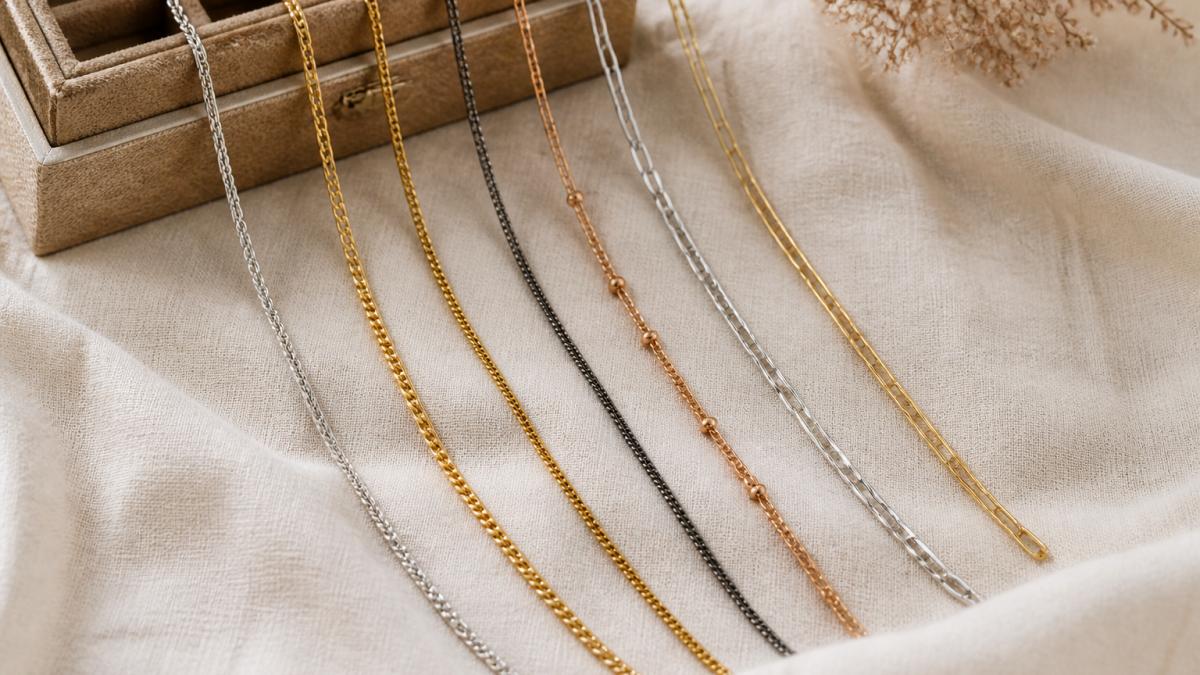
Stainless steel outlasts sterling silver for everyday wear, largely because sterling silver tarnishes and scratches more readily with daily exposure. Stainless steel, including the 316L grade often called surgical steel, resists rust, corrosion, and tarnish well and holds up to sweat and repeated handling. Sterling silver, which is 92.5% silver, offers a brighter precious-metal look but demands more attention. It tarnishes as it reacts with sulfur compounds in air and on skin, and it dents more easily because it is softer.
A materials durability overview from Park Place Jewelers ranks stainless steel at the top for everyday jewelry, with sterling silver described as cost-effective and more durable than brass-based alternatives. Our take: choose stainless steel for a necklace worn daily, and sterling silver for pieces rotated in and out.
Titanium, Tungsten, and Cobalt: Tough Metals for Daily Wear
Titanium, tungsten, and cobalt all rank among the toughest jewelry metals, but they differ in weight and finish. Titanium is notably lightweight and strong, which makes it comfortable for all-day wear and a common pick for people with sensitive skin. Tungsten is described as one of the toughest and most long-lasting materials available, and tungsten carbide sits near the top of durability rankings. Cobalt offers similar strength with a brighter, whiter finish than tungsten.
The trade-off is repairability. These metals resist bending so well that resizing and repair are harder than with silver or gold. For a fixed-size necklace worn daily, that toughness is an advantage. For a piece you expect to alter later, it is a limitation worth weighing.
Gold-Filled vs Gold-Plated Jewelry Durability: What Wears Off First
Gold-filled jewelry outlasts gold-plated jewelry because the gold layer is mechanically bonded and far thicker, so it resists wearing through. Gold-plated pieces carry a thin gold coating over a base metal. That coating is the first thing to fail: it wears away at contact points like the clasp and where the chain rubs the neck, revealing the metal underneath. Gold-filled construction bonds a thicker layer of gold to the base, so the color holds far longer under daily friction.
If you want a warm gold tone for a necklace worn every day, gold-filled is the practical choice. Gold-plated works for occasional wear, but expect the finish to dull with frequent use. Check the clasp and the area behind the pendant first, since those spots show wear earliest.
Durable Necklace Chain Types: Where Necklaces Actually Break
The chain, not the pendant, is where most necklaces fail. A pendant can be solid metal and still fall off if the chain stretches or the clasp gives out. The most durable chain types for daily wear are:
- Cable chain: Simple interlocking links; easy to repair and strong for its weight.
- Curb chain: Flattened, tightly interlocked links that resist stretching.
- Box chain: Square links that lie flat and resist tangling, though they can kink if pulled hard.
- Wheat chain: Braided links that distribute stress well and resist kinking.
Most buying guides stop there. The real question is which part of the necklace breaks first, and why. A necklace is a load-bearing system: the pendant hangs from the chain, the chain hangs from the clasp, and the clasp hangs from a jump ring.
The clasp is the true weakest link. A lobster clasp is the most common closure on everyday necklaces because it holds up better than a spring-ring clasp under repeated open-and-close cycles. But even a good lobster clasp has a spring and a pivot that wear out. Spring-ring clasps are lighter and cheaper but can pop open under tension.
Solder joints matter as much as the links. On many chains, each link is not a closed loop, it is a wire bent into a loop and soldered shut. If the solder is weak or the joint is stressed, the link opens. This is why a chain can look intact while one link has quietly spread.
Match chain weight to pendant weight. A heavy pendant on a thin chain pulls the links apart over time.
Check the three failure points monthly. Run a fingernail along the clasp to feel for a loose spring, tug gently on the jump ring to confirm it is closed and soldered, and hold the chain up to a light to look for a stretched or opened link.
Water, Sweat, and Skin: What Everyday Exposure Does to Necklace Materials
Water, sweat, and cosmetics are the main drivers of tarnish and finish wear on everyday necklaces, but each material reacts differently.
Chlorine and salt water. Chlorinated pool water and salt water both accelerate corrosion on plated and silver pieces. Chlorine is an oxidizer that attacks the copper in sterling silver and the base metal under gold plating, causing pitting that polishing cannot fix.
Sweat. Sweat carries acids and salts that dull finishes over time. The effect is worse on plated jewelry because sweat works into the boundary between the coating and the base metal, lifting the plating from the edges inward.
Sunscreen, perfume, and hair products. Lotions, perfume, and hair products leave residues that trap moisture against the metal. Sunscreen is the most aggressive of these because it contains oils and chemical filters that can stain porous finishes and soften adhesives in plated pieces.
Household cleaners. Bleach, ammonia, and abrasive cleansers are the most damaging common exposures. Ammonia attacks the copper in sterling silver and in the base metal under gold plating. Bleach can pit stainless steel and discolor gold-filled pieces.
What is recoverable and what is not. Tarnish on sterling silver is a surface reaction and can be removed with a silver polishing cloth or a mild silver dip.
How to Care for Everyday Jewelry So It Keeps Its Finish
Caring for everyday jewelry comes down to a few repeatable habits: keep it dry, clean it gently, and store it so pieces do not rub together. A soft cloth removes oils and residue after each wear. Mild soap and warm water handle deeper cleaning for most metals, followed by a full dry. Store necklaces separately or hang them to prevent tangling and scratches.
A quick care checklist we share with customers:
- Wipe the chain and pendant with a soft cloth after wearing
- Remove before swimming, showering, or exercising
- Apply perfume and lotion before putting the necklace on
- Store each piece separately to avoid scratches
- Check the clasp monthly for looseness or wear
Choosing the Best Durable Necklace Material for the Person Wearing It
Match the material to the wearer's habits, skin, and the meaning behind the gift. For someone who never takes a necklace off, stainless steel or titanium is the safest bet. For a person with sensitive skin, titanium and stainless steel are the most reliable choices. For a keepsake meant to carry a message, the metal matters less than the sentiment, but a durable one means the piece stays wearable for years.
This is where Thread & Flame Co fits. Our meaningful necklace gifts and custom message card jewelry are designed to celebrate the people you love most, from daughters and wives to moms and grandmothers. The custom message card carries your words; the necklace carries them daily. We help you pair a heartfelt message with a piece built for everyday wear, so the gift lasts as long as the feeling behind it.
Frequently Asked Questions
What is the most durable type of necklace material for everyday wear?
Stainless steel and titanium rank among the most durable necklace materials for daily wear. Stainless steel, especially 316L, resists tarnish, scratches, and corrosion while staying affordable, and titanium offers similar toughness at roughly a third of gold's weight. Tungsten and cobalt are even harder, but they appear more often in rings than necklaces because they are heavy and difficult to resize. For a necklace you never take off, stainless steel or titanium is the practical pick.
Is stainless steel or sterling silver better for an everyday necklace?
For pure durability, stainless steel wins. It resists tarnish, oxidation, and water exposure, so it holds up to showers, sweat, and daily wear with minimal care. Sterling silver is 92.5% silver, which makes it a genuine precious metal with a brighter look, but it tarnishes over time and needs regular polishing. Choose stainless steel for low-maintenance daily wear, or sterling silver if you want a precious-metal finish and do not mind occasional cleaning.
Will gold-filled jewelry hold up to daily wear?
Gold-filled jewelry lasts far longer than gold-plated pieces because a thick layer of gold is bonded to the base metal rather than electroplated onto it. With normal daily wear, gold-filled necklaces can keep their finish for years, while gold plating tends to wear through at friction points like the clasp and chain links within months. If you want a gold look for everyday wear, gold-filled is the more durable choice.
Can you shower or sleep in a necklace every day?
It depends on the material and the chain. Stainless steel and titanium handle showers and sleep with little risk. Sterling silver, gold-plated, and gold-filled pieces fare worse: soap, shampoo, and perspiration speed up tarnish and plating wear, and sleeping can kink or stretch a fine chain. If you want to never remove your necklace, choose a solid stainless steel or titanium chain and check the clasp regularly for loosening.
How do you care for a necklace worn every day?
Wipe the necklace with a soft dry cloth after wearing to remove oils and sweat, and store it flat or hanging to prevent tangles. Keep sterling silver in an anti-tarnish pouch or bag to slow oxidation. Remove the piece before swimming in chlorinated water or applying lotions, perfume, and hairspray, since chemicals accelerate tarnish and plating wear. Check the clasp and chain links every few months, because the clasp is usually the first part to fail on a well-made necklace.
Choosing a durable necklace is really about matching metal to a person's daily life, and getting that match right takes the guesswork out of gifting. Thread & Flame Co pairs meaningful necklace gifts with custom message card jewelry, so your words and the piece itself both hold up over time. Explore our collections for daughters, wives, moms, and grandmothers, and choose options that turn a sentiment into something they can wear every day.